Trump unveils tariff rates set to take effect next week
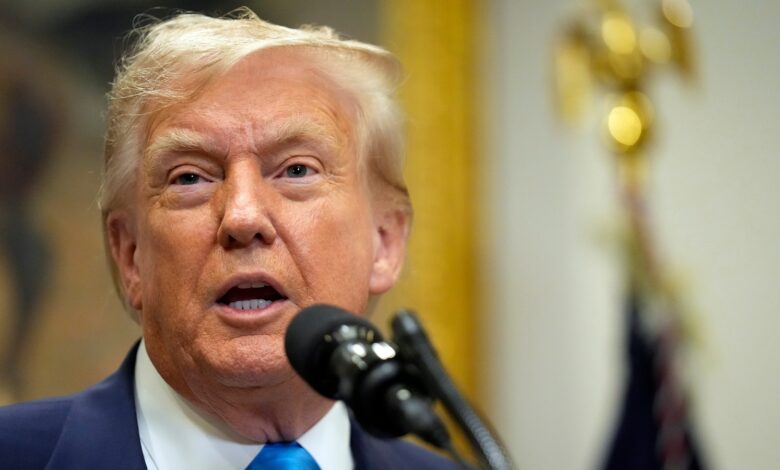
President Donald Trump recently issued an executive order imposing tariffs on numerous countries that the United States trades with. The new duties are scheduled to take effect in seven days, contrary to the initial expectation of an immediate implementation. The executive order outlines tariff rates ranging from 10% to 41% for nearly 70 countries, marking the beginning of a new trade system, according to a Trump administration official.
The order was unveiled just hours before the Aug. 1 deadline set by Trump for countries to negotiate trade deals with the U.S. However, the tariffs will not be enforced right away. Instead, they will be rolled out next week, with an extended deadline for goods shipped by vessel. Any items shipped by Aug. 7 and arriving in the U.S. by Oct. 5 will not be subject to the new tariff rates.
Among the countries facing the highest rates in the executive order are Laos and Myanmar at 40% and Syria at 41%. Additionally, Brazil will face a 50% rate on its imports to the U.S., with a 40% tariff announced previously by Trump added to the 10% baseline tariff in the new order. Canada will be subject to a 35% tariff, as outlined in a separate executive order, while India will face a 25% tariff.
Countries not listed in the executive order will be subject to a 10% tariff. The White House has stated that the rates were determined based on the trade deficit the U.S. has with these trading partners.
The new tariff rates are similar to those imposed on over 90 countries on April 2, although there are some variations. Trump initially announced these reciprocal tariffs in April but later delayed them, pledging to secure approximately 90 trade deals in 90 days. The tariffs were postponed again in early July, with a new deadline of Aug. 1.
The latest executive order includes 15% tariffs on goods from countries like Bolivia, Ecuador, Ghana, and Iceland, which were not initially covered in the president’s previous executive order. Some rates have been reduced due to trade agreements previously announced by the White House. For example, Vietnam will face a 20% tariff, down from 46%, and Japan will be subject to a 15% tariff, reduced from 24%.
In the days leading up to the executive order, Trump reached agreements with various countries, including the United Kingdom, Indonesia, Vietnam, the Philippines, Japan, the European Union, South Korea, and a preliminary accord with China. These agreements aimed to lower tariffs imposed by both the U.S. and the countries involved.
The administration also announced a 90-day delay for reciprocal tariffs targeting Mexico, with the country now facing a 25% tariff for most goods. The tariffs exclude products compliant with the United States-Mexico-Canada Agreement.
According to the Yale Budget Lab, the tariffs proposed by Trump are expected to cost an average household an additional $2,400 this year. Importers typically pass on a portion of the tariff-related tax burden to consumers through price increases.
The Trump administration views tariffs as part of its broader “America First economic policies,” which have reportedly led to significant investment in U.S. manufacturing, technology, and infrastructure. A Trump administration official described the new tariffs as part of a “new system of trade” that prioritizes “fair and balanced trade.”
Trump has emphasized that the intermittent imposition of tariffs is a crucial aspect of his negotiation strategy. The administration aims to secure the best trade deals for the American people and workers. White House press secretary Karoline Leavitt highlighted this goal when announcing the Aug. 1 deadline.
In conclusion, the executive order issued by President Trump signifies a significant shift in U.S. trade policy, with the aim of addressing trade imbalances and securing favorable deals for American businesses and workers. The implementation of tariffs on various countries reflects the administration’s commitment to reshaping the global trade landscape.