Trump White House distances itself from provocative claims by Noem, others on Pretti shooting
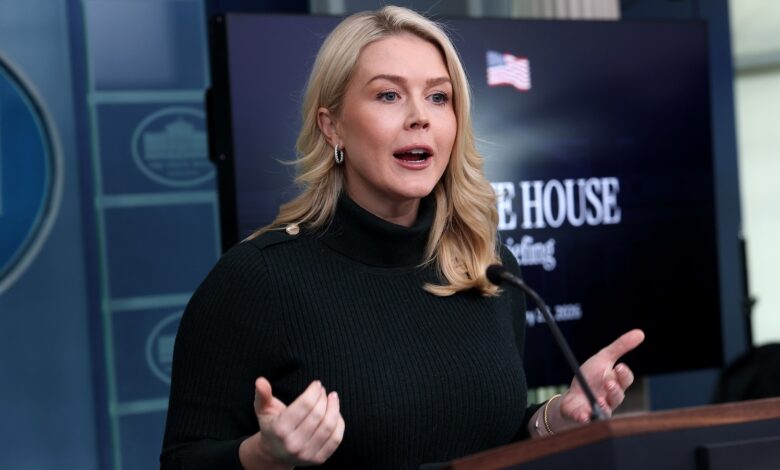
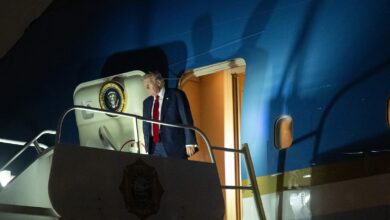
In the aftermath of the fatal shooting of Alex Pretti in Minneapolis involving federal agents, President Donald Trump and White House press secretary Karoline Leavitt are distancing themselves from the provocative statements made by top administration officials.
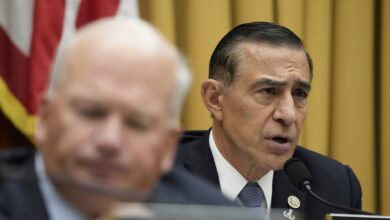
Homeland Security Secretary Kristi Noem and deputy White House chief of staff Stephen Miller quickly accused Pretti, an ICU nurse, of domestic terrorism after the shooting without providing any evidence to support their claims. This led to questions from reporters about whether President Trump agreed with those statements. Leavitt responded by saying that the president had not characterized Pretti in that way and emphasized that the investigation should be allowed to unfold based on facts.
In an interview with the Wall Street Journal, President Trump declined to comment on whether the agents involved in the shooting acted appropriately, stating that his administration was reviewing the situation. The shooting is currently under investigation by Homeland Security Investigations and the FBI, with Customs and Border Protection conducting their own internal review.
President Trump announced that he is sending his border czar, Tom Homan, to Minnesota, bypassing the usual chain of command. This decision raised eyebrows as it was seen as a move to exert direct control over the situation. Noem, Bovino, and FBI Director Kash Patel have defended the agents’ actions, claiming that Pretti was armed and posed a threat to officers.
However, state and local officials have stated that Pretti was lawfully carrying a gun with a concealed carry permit and video evidence reviewed by ABC News does not show Pretti drawing his weapon during the incident. This has led to criticism from both Democrats and Republicans, as well as from editorial boards at traditionally conservative outlets like the New York Post and the Wall Street Journal.
Calls for Noem to resign or be impeached have emerged from some Democrats, but Leavitt reiterated the president’s confidence in her oversight of the Department of Homeland Security and immigration enforcement. Despite the controversy surrounding the shooting and the administration’s response, the investigation is ongoing, and the facts of the case will ultimately determine the outcome. On January 13, 2026, Border Patrol commander Greg Bovino visited Minneapolis to address the immigration situation in the city. This visit came amidst rising tensions between federal officials and Minnesota’s Democratic leadership. Secretary of Homeland Security Kristi Noem and Border Czar Tom Homan also played key roles in addressing the situation.
President Trump had a productive phone call with Minnesota Governor Tim Walz, where they discussed the federal intervention in Minneapolis. Despite areas of disagreement, both leaders seemed to be on a similar wavelength. However, Walz expressed concerns about the misinformation being spread by federal officials regarding the situation in Minnesota.
In an op-ed for the Wall Street Journal, Walz criticized federal officials for their handling of the immigration issue, calling it chaotic, illegal, and un-American. He emphasized the need for effective law enforcement that follows the rule of law.
Trump also spoke with Minneapolis Mayor Jacob Frey, noting that progress was being made in the discussions. He mentioned that Tom Homan would continue the dialogue with Frey to address the ongoing issues in the city.
The White House continued to blame Minnesota’s Democratic leadership for the rising tensions in Minneapolis. Spokesperson Leavitt reiterated that federal law enforcement presence could be scaled back if local police cooperated in apprehending and detaining undocumented immigrants.
Overall, the situation in Minneapolis highlighted the ongoing challenges and disagreements between federal and local authorities regarding immigration enforcement. It remains to be seen how the dialogue and cooperation between different levels of government will evolve to address these complex issues. The world of technology is constantly evolving, with new innovations and advancements being made every day. One of the most exciting developments in recent years is the rise of artificial intelligence (AI). AI has the potential to revolutionize industries and change the way we live and work.
AI refers to the simulation of human intelligence in machines that are programmed to think and learn like humans. This technology has the ability to perform tasks that typically require human intelligence, such as visual perception, speech recognition, decision-making, and language translation. AI has already been integrated into a variety of applications, from virtual assistants like Siri and Alexa to self-driving cars and predictive analytics.
One area where AI has had a significant impact is in healthcare. AI algorithms can analyze large amounts of data to identify patterns and make predictions, which can help doctors diagnose diseases more accurately and develop personalized treatment plans for patients. AI-powered medical imaging tools can also assist radiologists in detecting abnormalities in scans, leading to earlier diagnosis and treatment.
In the field of finance, AI is being used to automate trading, detect fraud, and assess credit risks. AI algorithms can analyze market trends and make predictions about future stock prices, helping investors make informed decisions. Banks are also using AI to improve customer service by providing personalized recommendations and detecting suspicious activity on accounts.
AI is also playing a role in the automotive industry, with companies like Tesla developing self-driving cars that use AI algorithms to navigate roads and avoid obstacles. These autonomous vehicles have the potential to reduce accidents and traffic congestion, as well as provide greater mobility for people who are unable to drive.
Despite the numerous benefits of AI, there are also concerns about its potential impact on jobs and privacy. As AI becomes more advanced, there is a fear that it could lead to job displacement, as machines take over tasks that were previously done by humans. There are also concerns about the ethical implications of AI, such as bias in algorithms and the potential for misuse of personal data.
Overall, AI has the potential to revolutionize industries and improve the way we live and work. It is important for policymakers, businesses, and society as a whole to carefully consider the implications of AI and work together to ensure that this technology is used responsibly and ethically. With proper oversight and regulation, AI has the potential to bring about a new era of innovation and progress.