Trump’s Greenland ‘deal framework’ and tariff backdown confuse
The recent announcement by U.S. President Donald Trump regarding the suspension of tariffs on European countries has sparked mixed reactions from markets and European leaders. While some welcomed the news, others were left puzzled by the lack of clarity surrounding the supposed agreement.
In a statement to CNBC, Trump mentioned a “concept of a deal” with NATO Secretary-General Mark Rutte, leading to the decision to halt the imposition of tariffs on eight European countries from February 1. This development caused a positive market reaction, but uncertainties lingered over the details of the agreement, particularly concerning Greenland.
The president hinted at a significant deal related to Greenland, emphasizing its strategic importance for U.S. national security and access to valuable minerals. However, it remains unclear whether Denmark or Greenland had actually agreed to any terms. Rutte clarified that the issue of Greenland’s ownership was not discussed during his talks with Trump, focusing instead on Arctic security in light of increased Chinese and Russian activities in the region.
Experts have expressed skepticism about the lack of transparency surrounding the supposed agreement, with some cautioning that bargaining over disputed territories could set a dangerous precedent. Additionally, Chinese state media called on the European Union to reassess its security dependence on the U.S. and pursue greater strategic autonomy in response to Trump’s shifting commitments.
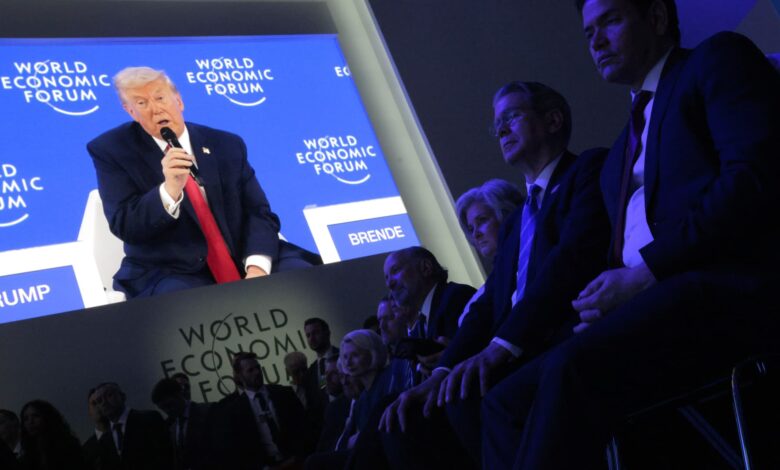
The decision to back down from imposing tariffs was attributed by some analysts to concerns about rising global bond yields and the potential impact of a new trade war. While Trump acknowledged market concerns during his speech at Davos, he also highlighted the need for European countries to increase their defense spending, suggesting that they had been relying too heavily on U.S. security support.
Despite the temporary reprieve from tariffs, veteran investor David Roche advised European leaders to prepare for worst-case scenarios and not rely on Trump’s threats as a reliable indicator of future actions. Roche emphasized the need for a proactive approach in dealing with the unpredictability of the current political landscape.
In conclusion, the recent developments surrounding Trump’s tariff decision underscore the complexities of international relations and the challenges of navigating diplomatic negotiations in an increasingly volatile global environment. European leaders must remain vigilant and adaptable in their strategies to effectively address the uncertainties posed by shifting geopolitical dynamics.