Trump’s MMR vaccine schedule change faces two key hurdles

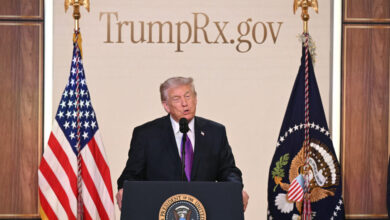
President Trump’s recent call for changes to the measles, mumps, and rubella (MMR) vaccine has sparked controversy and concern among experts in the medical field. In a post on his Truth social account, Trump advocated for breaking up the MMR shot into three separate vaccines, rather than the current combined vaccine that is administered to children.
The current practice offers parents the option of either the MMR vaccine or a quadrivalent shot that includes measles, mumps, rubella, and varicella (chickenpox). While the combined vaccine has been shown to be safe and effective, Trump’s suggestion to separate the components has raised questions about its potential impact on vaccination coverage and public health.
Experts, including infectious disease physicians and vaccine advisers, have refuted the idea of splitting the MMR vaccine, citing lack of scientific evidence to support such a move. They emphasize that the combined vaccine provides equal safety and efficacy, with the added benefit of fewer injections and better compliance.
Trump’s proposal aligns with the recommendations of Andrew Wakefield, a discredited anti-vaccine advocate whose fraudulent study linking MMR vaccines to autism has been debunked. Despite the lack of new data or research supporting the need to separate the MMR vaccine, Trump’s stance has raised concerns about the potential consequences of such a policy change.
The availability of monovalent vaccines for measles, mumps, and rubella in the U.S. was phased out in 2009 due to the success of the combined MMR vaccine. Reintroducing monovalent vaccines would require extensive clinical trials, FDA approval, and a significant overhaul of vaccine development pipelines.
While the MMR vaccine has been proven to be highly effective in preventing diseases, there is a minimal risk of side effects, such as febrile seizures. Experts caution that any attempt to switch to monovalent vaccines could lead to decreased vaccination rates, increased disease outbreaks, and unnecessary harm to children.
The recent measles outbreak in the U.S. serves as a stark reminder of the importance of maintaining high vaccination coverage. Experts warn that deviating from the current vaccination schedule could jeopardize public health efforts and undermine decades of progress in eliminating preventable diseases like measles and rubella.
In conclusion, the consensus among experts is clear: the MMR vaccine is safe, effective, and vital for protecting public health. Trump’s proposal to separate the MMR vaccine lacks scientific merit and could have detrimental consequences for vaccination rates and disease prevention efforts. It is essential to rely on evidence-based recommendations and prioritize the well-being of children and communities when it comes to vaccination policies.