Twitter shareholder lawsuit accusing Elon Musk of driving down stock goes to jury
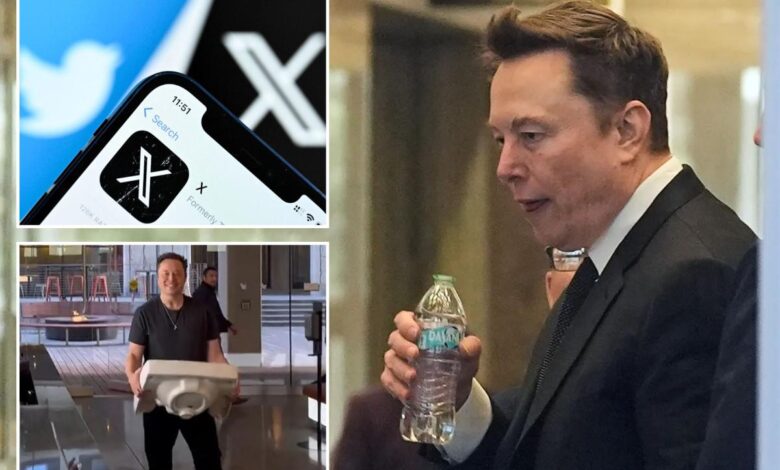
Closing arguments have wrapped up in the trial where Elon Musk faced off against Twitter shareholders, accusing him of deceptive behavior that misled investors as he tried to back out of a $44 billion deal to purchase the social media platform in 2022.
The civil trial in San Francisco revolves around a class-action lawsuit filed just before Musk assumed control of Twitter, which he later rebranded as X, in October 2022, following his agreement to acquire the company for $44 billion, or $54.20 per share. This amount represents a fraction of Musk’s current estimated fortune of $839 billion.
The trial primarily focused on Musk’s assertions regarding the prevalence of bots on Twitter. Musk maintained that Twitter had a significantly higher number of fake and spam accounts than the 5% disclosed in regulatory filings. He cited this discrepancy as grounds to withdraw from the acquisition.
After attempting to pull out of the deal, Twitter took legal action in Delaware to enforce the original agreement. However, Musk eventually relented and agreed to fulfill his initial commitment.
Plaintiffs in the case are seeking accountability from Musk for causing financial losses to investors through tweets, including one from May 13, 2022, announcing the deal was “on hold.”
The plaintiffs allege that Musk deliberately drove down Twitter’s stock price by making statements to facilitate renegotiation of the deal at a lower price or its cancellation. Musk’s lawyer countered these claims, stating that there was no concrete evidence proving Musk orchestrated a scheme to manipulate Twitter’s stock price.
The issue of bots and fake accounts on Twitter was a known concern at the time of Musk’s negotiation for the acquisition. Twitter had previously settled claims of inflating its growth rate and user figures. Musk contended that the bot numbers were much higher, while Twitter’s former CFO testified that the actual figure was closer to 1%.
The trial also delved into Musk’s past tweets criticizing the number of fake accounts on Twitter and his belief that the platform exaggerated user numbers. Musk’s lawyer used visual aids to demonstrate the legitimacy of Musk’s statements, emphasizing that the case was not about frivolous tweets but rather about alleged securities fraud.
Despite facing negative opinions from some jurors, Musk has raised concerns about the fairness of the trial and filed a motion for a mistrial, citing biased conduct from the plaintiffs and the judge.
Overall, the trial has shed light on the complexities surrounding Musk’s attempted acquisition of Twitter and the legal battle that ensued.