U.S. imports from China fell sharply in June, despite rush of orders ahead of new tariffs
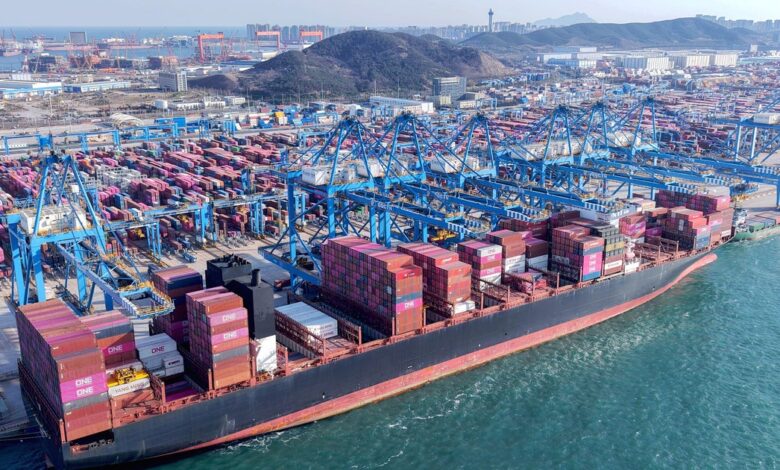
China’s export growth accelerated in June as companies and consumers rushed to place orders ahead of an August deadline for potential U.S. tariffs. According to customs data released on Monday, exports increased by 5.8% from a year earlier, up from a 4.8% rise in May. This surge in exports was driven by a flurry of pre-orders as businesses sought to avoid the impact of looming tariffs.
While exports to the United States decreased by 16%, it was a significant improvement from the 34.5% decline seen in May. This improvement can be attributed to companies rushing to pre-order inventory before the expiration of a 90-day tariff truce in August. Following the imposition of tariffs by U.S. President Donald Trump on imports from China, both countries agreed to a temporary truce to facilitate trade talks.
Despite the temporary reprieve, uncertainty looms as preliminary discussions between the U.S. and China have not yielded significant progress. The Trump administration has increased tariffs on Chinese imports by 30%, pending a deadline on August 12. This uncertainty has made it challenging for companies to plan for the future, as sudden changes in policy continue to disrupt trade relations.
The recovery in trade is expected to contribute to economic growth in the second quarter of the year. However, the outlook remains uncertain as tariffs are expected to remain high, limiting Chinese manufacturers’ ability to expand their global market share by lowering prices. This is likely to result in a slowdown in export growth in the coming quarters, which could weigh on overall economic growth.
Despite the challenges posed by the trade war with the U.S., China’s global trade continued to grow in the first half of the year. Total trade, including exports and imports, reached a record high of over 20 trillion yuan ($2.8 trillion), as Chinese businesses diversified their production and export markets. The global trade surplus for China in the first half of the year stood at $586 billion.
Exports to Southeast Asia saw significant growth, with shipments to Thailand up by 22%, Vietnam by nearly 20%, and India by more than 18%. Trade with Europe also remained robust, increasing by 6.6% in the first half of the year. However, auto exports suffered a decline after the European Union imposed higher tariffs on Chinese-made electric vehicles, leading to a drop of nearly 38% in exports and more than 23% in auto parts exports.
In conclusion, while China’s trade growth showed resilience in the face of escalating trade tensions with the U.S., challenges remain on the horizon. The impact of tariffs, uncertain trade policies, and global economic conditions will continue to shape China’s trade outlook in the coming months.