U.S. to apply increased pressure on trade deals, warns higher tariffs could roll out Aug. 1
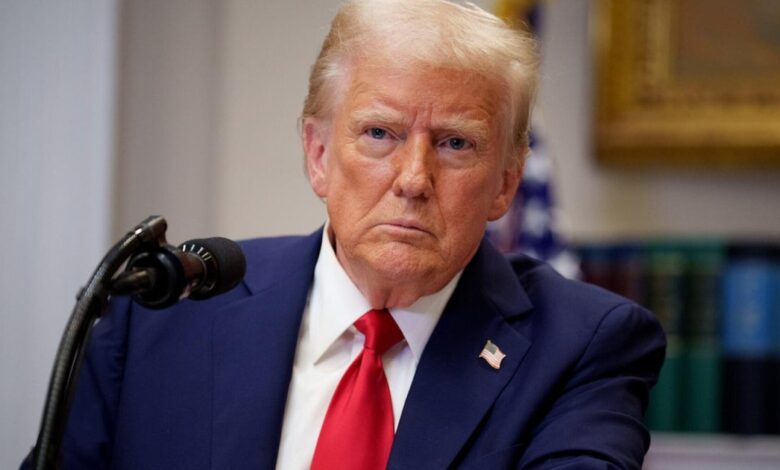
The White House is gearing up to apply pressure on the United States’ trading partners in an effort to secure new tariff deals before an upcoming deadline. President Trump and his administration are set to send out dozens of letters to countries that have not yet finalized trade agreements, warning them that higher tariffs could go into effect on August 1st if deals are not reached by Wednesday.
According to White House National Economic Council director Kevin Hassett and Treasury Secretary Scott Bessent, the administration hopes to expand trade relationships with smaller partners who have the potential to become significant trading allies. Hassett emphasized the importance of countries rushing to secure deals with the U.S. before the looming deadline.
President Trump confirmed that around 15 letters will be dispatched starting Monday, with more scheduled to go out on Tuesday and Wednesday. He noted that progress has been made on some deals, indicating that negotiations are underway with various nations around the world.
Trump took to social media to announce that any country aligning with the anti-American policies of the BRICS alliance could face an additional 10% tariff. The alliance, originally consisting of Brazil, Russia, India, China, and South Africa, has expanded to include Iran, Egypt, Ethiopia, and the United Arab Emirates. The President did not specify the criteria that would trigger the added BRICS tariff.
Commerce Secretary Howard Lutnick mentioned that higher tariffs could be implemented on August 1st for countries that fail to finalize trade deals by the Wednesday deadline. However, questions linger regarding which nations will receive notifications, whether any changes will occur in the coming days, and whether the deadline will be extended once more.
Treasury Secretary Scott Bessent stated that approximately 100 letters would be sent to smaller countries with minimal trade volume and existing tariffs at the baseline of 10%. The administration is primarily focusing on nations that contribute significantly to the U.S. trade deficit, with Bessent highlighting 18 key trading relationships that account for 95% of the deficit.
While the possibility of the August 1st deadline being extended remains, the administration is applying maximum pressure on other nations to secure trade agreements. White House Council of Economic Advisers chair Stephen Miran indicated that countries negotiating in good faith and making concessions could potentially have the deadline postponed.
President Trump’s announcement of steeper tariffs in April raised concerns of a global economic upheaval and potential trade wars. The administration temporarily suspended most of the higher import taxes set to take effect, but the baseline 10% tariff remained in place, with an increased rate on goods imported from China.
As the freeze on sweeping U.S. tariffs is set to expire on July 9th, the White House has been highlighting new trade agreements with countries such as China, the U.K., and Vietnam. However, uncertainties persist as additional deals are yet to be announced.
Despite the complexity of trade negotiations, experts believe that the U.S. may extend the tariff pause for some nations due to the time required to finalize agreements. Secretary Bessent hinted at imminent major announcements in the coming days, suggesting that several deals are close to being sealed.
With ongoing discussions with various countries, including Vietnam, the U.S. is navigating the intricacies of trade negotiations to secure favorable terms for American businesses. The administration’s focus on addressing trade deficits and establishing mutually beneficial partnerships underscores its commitment to reshaping international trade relations.
Canadian Prime Minister Mark Carney has made it clear that he is determined to finalize a new trade deal by July 21. Carney has stated that if an agreement is not reached by this deadline, Canada will be forced to implement trade countermeasures. This sense of urgency is a reflection of the importance of securing a new trade agreement with Canada’s largest trading partner, the United States.
However, the timeline for reaching a deal is still uncertain. While US Trade Representative Hoekstra has not committed to a specific date for finalizing a trade agreement, he has indicated that even with a deal in place, Canada may still face some tariffs. Hoekstra emphasized that the United States is not simply going to send Canada a letter outlining the terms of the agreement. Instead, both countries are working towards a comprehensive and well-articulated deal that addresses the concerns and interests of both parties.
The negotiations between Canada and the United States are complex and multifaceted. Key issues such as tariffs, trade barriers, and market access are being carefully considered and discussed. Both countries are working towards a mutually beneficial agreement that promotes economic growth and strengthens the trade relationship between the two nations.
It is crucial for both Canada and the United States to come to a final agreement that is clear, detailed, and well-articulated. This will provide certainty and stability for businesses and investors on both sides of the border. A new trade deal will also help to foster economic growth, create jobs, and enhance the competitiveness of North American industries in the global marketplace.
As the deadline for reaching a new trade agreement approaches, Canadian Prime Minister Mark Carney and US Trade Representative Hoekstra are focused on finding common ground and resolving any remaining issues. Both leaders are committed to reaching a deal that benefits the citizens and economies of both countries. The coming days will be crucial in determining the future of the Canada-US trade relationship, and both sides are working diligently to ensure a successful outcome.