UK growth in third quarter slows after big fall in car production
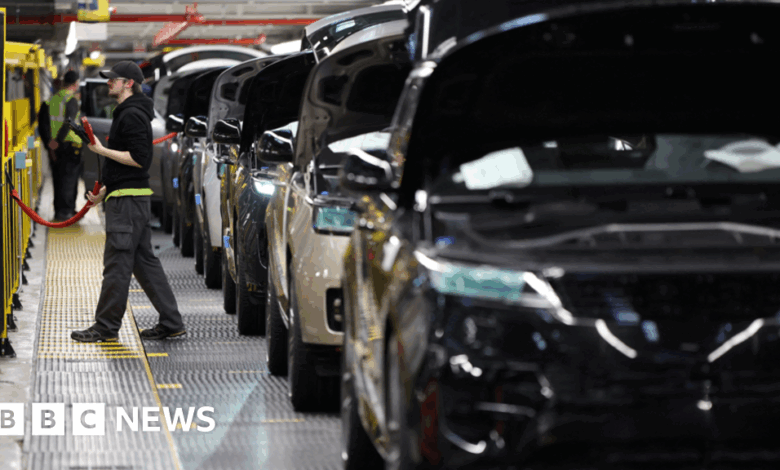
The UK economy experienced a slowdown in growth during the July-to-September period, with figures showing a growth rate of just 0.1%. This was below the 0.2% that analysts had predicted, dealing a blow to Chancellor Rachel Reeves, who has emphasized the importance of economic growth. The slowdown was primarily attributed to a significant drop in car production, particularly in September following a cyber-attack on Jaguar Land Rover.
Although the cyber-attack played a major role in the decline in car production, other sectors of the economy also showed weak growth. Services, which include industries like retail, restaurants, and real estate, experienced slower growth compared to the previous quarter. Consumer spending remained weak, leading economists to predict that it could continue to weigh on growth for the remainder of the year.
Overall, the GDP figure for the third quarter marked a deceleration from the growth seen earlier in the year. In September alone, the economy contracted by 0.1%, largely due to the impact of the cyber-attack on JLR. The Office for National Statistics reported a 2% decrease in production output in September, with car output plummeting by 28.6% following the attack.
Some analysts believe that the weaker-than-expected growth figures increase the likelihood of a rate cut by the Bank of England next month. The chief UK economist at Pantheon Macroeconomics, Rob Wood, suggested that the data “all but seals a December rate cut,” especially when considering the recent weak jobs figures.
Businesses are feeling the effects of the economic slowdown, with many having to absorb increased costs. Allan Jones, managing director of pie manufacturer TC Morris, highlighted that his business saw a £200,000 increase in operating costs this year. Jones expressed hope for relief in the upcoming Budget, including lower taxes, reduced energy costs, and more support for investment opportunities through government-backed grants.
Chancellor Rachel Reeves responded to the ONS data by emphasizing the need to build an economy that benefits working people. She pledged to make fair decisions in the upcoming Budget to strengthen the economy and address issues such as healthcare waiting lists, national debt, and the cost of living. However, Shadow Chancellor Mel Stride criticized the government, suggesting that they were lacking in power and responsibility.
Looking ahead, economists remain cautious about the UK’s economic prospects. ONS director Liz McKeown noted the decline in car production and the pharmaceutical industry, while services continued to drive growth. Ruth Gregory, deputy chief UK economist at Capital Economics, expressed concerns about the economy’s struggle to gain momentum, especially with potential tax increases in the upcoming Budget. Overall, the outlook for GDP growth remains uncertain, with little indication of a significant acceleration in the near future.