UK interest rates cut to lowest level in more than two years
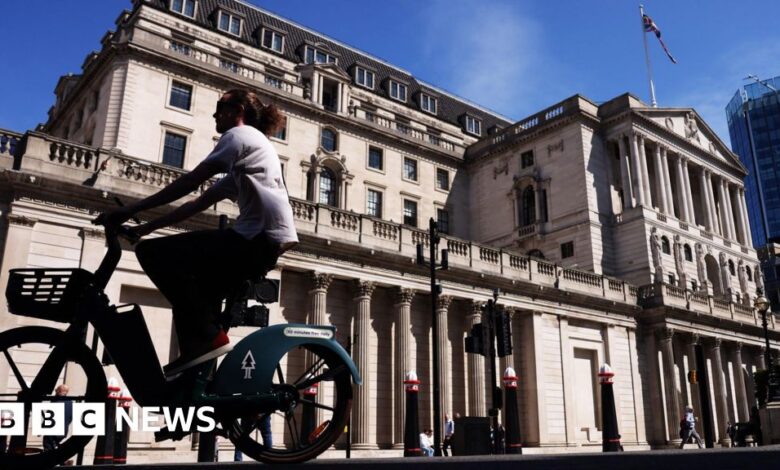
The Bank of England recently made the decision to cut interest rates to 4%, marking the lowest level in over two years. This move, the fifth cut since August of the previous year, was met with some contention among the Bank’s policymakers, requiring two votes to reach a final decision. While this rate cut is expected to reduce monthly mortgage costs for some homeowners, it may also result in lower returns for savers.
The decision to lower interest rates comes amidst concerns over rising inflation, which is projected to peak at 4% in September, double the Bank’s target rate. Despite this higher-than-desired inflation rate, the Bank is also facing economic challenges, including sluggish growth and job market uncertainties.
Andrew Bailey, the governor of the Bank of England, emphasized that while interest rates are on a downward trend, future rate cuts will need to be implemented cautiously and gradually. He acknowledged the uncertainties surrounding future rate adjustments, particularly in light of the current economic landscape.
Businesses have reported significant cost increases, attributing them to factors such as National Insurance Contributions, the national living wage, and global supply chain disruptions due to adverse weather conditions. These cost pressures have led to higher food prices and forced some companies to reduce staff to manage expenses.
While the rate cut may benefit mortgage-holders with tracker mortgages, providing immediate relief in monthly repayments, it poses challenges for homeowners looking to remortgage at higher rates than in previous years. Individuals like Adam Christie, who recently re-fixed his mortgage rate, are facing increased repayments and uncertainty about future rate changes.
The Bank’s Monetary Policy Committee was divided on the decision to cut rates, reflecting the complex economic considerations at play. As the Bank continues to navigate the delicate balance between supporting economic recovery and managing inflation, the path forward remains uncertain. Four members of the Bank of England’s Monetary Policy Committee (MPC) were in favor of cutting interest rates, while four others preferred to hold rates steady. The remaining member, Alan Taylor, advocated for a more significant reduction in borrowing costs.
There had been speculation among economists that the Bank would announce another rate cut at its November meeting. However, the close split in the MPC’s vote has raised doubts about the likelihood of a further reduction in the near future.
Susannah Streeter, head of money and markets at Hargreaves Lansdown, commented that the Bank of England was proceeding cautiously with its monetary policy decisions. She noted that while a rate cut had been implemented, the chances of another cut before the end of the year had diminished.
Ruth Gregory, deputy chief economist at Capital Economics, observed that the Bank seemed to be in no hurry to lower rates again. She highlighted the MPC’s assessment of economic risks, suggesting that there was a possibility of skipping a rate cut later in the year.
Chancellor Rachel Reeves welcomed the rate cut, emphasizing its positive impact on reducing borrowing costs for households and businesses. However, shadow chancellor Mel Stride expressed disappointment that interest rates were not decreasing more rapidly, attributing the current rate cut to support the weakened economy under Rachel Reeves’ leadership.
Daisy Cooper, Liberal Democrat Treasury spokesperson, criticized the government for hindering economic growth and suggested that the rate cut should have been implemented sooner.
The Bank’s latest forecasts indicated a sharp slowdown in GDP growth for the April-to-June quarter, with an expected expansion of just 0.1%. This marked a significant decline from the 0.7% growth recorded in the preceding quarter. Additionally, the Bank revised its assessment of the impact of US tariffs on the UK economy, predicting a lesser impact than previously anticipated.
As the economic landscape continues to evolve, the Bank of England’s decisions regarding interest rates will play a crucial role in shaping the trajectory of the UK economy. Stay informed with the latest news and updates by signing up for our newsletter. The world of technology is constantly evolving, with new innovations and advancements being made every day. One of the most exciting developments in recent years has been the rise of artificial intelligence (AI). AI is a branch of computer science that aims to create intelligent machines that can think and learn like humans.
One of the key applications of AI is in the field of robotics. Robots are being designed with AI capabilities that allow them to perform a wide range of tasks, from simple household chores to complex industrial processes. These AI-powered robots are revolutionizing industries such as manufacturing, healthcare, and logistics, making processes more efficient and cost-effective.
In the healthcare industry, AI-powered robots are being used to assist doctors and nurses in a variety of tasks. For example, robotic surgery systems are being used to perform minimally invasive procedures with a high degree of precision. These robots can navigate the human body with more accuracy than a human surgeon, reducing the risk of complications and speeding up recovery times.
In manufacturing, AI-powered robots are being used to automate repetitive tasks such as assembly and packaging. These robots can work faster and more efficiently than human workers, leading to increased productivity and cost savings for companies. In addition, AI-powered robots can also be used to perform tasks that are too dangerous or difficult for humans to do, such as working in hazardous environments or handling toxic materials.
In the field of logistics, AI-powered robots are being used to streamline the supply chain and improve efficiency. Autonomous robots can be used to transport goods within warehouses, reducing the need for human workers to manually move items. These robots can also be used to optimize routes and schedules, ensuring that goods are delivered on time and at the lowest cost possible.
Overall, AI-powered robots are revolutionizing industries across the board, making processes more efficient, cost-effective, and safer. As technology continues to advance, we can expect to see even more exciting developments in the field of robotics and AI. The future is bright for AI-powered robots, and the possibilities are endless.