Underwater expedition unveils new imagery of sunken World War II destroyer
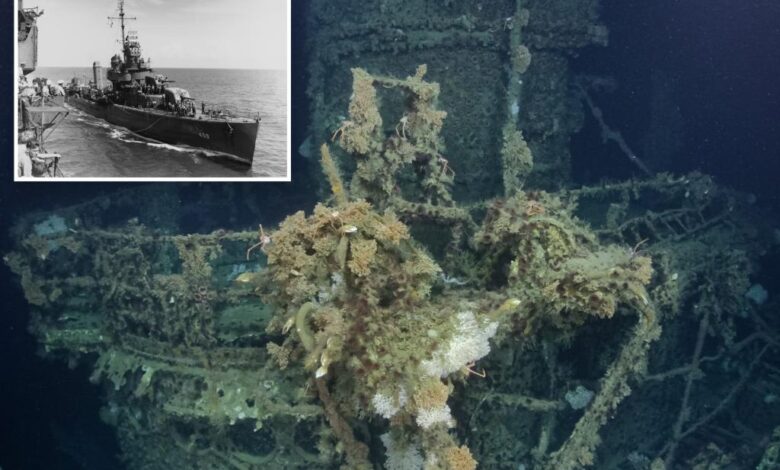
Maritime experts recently embarked on an expedition around the Solomon Islands in the South Pacific to explore the wreckage of the USS Laffey, a destroyer sunk during World War II. The USS Laffey went down on Nov. 13, 1942, during the Naval Battle of Guadalcanal and currently lies upright about half a mile beneath the surface in the Iron Bottom Sound, a graveyard for ships and planes lost during the war.
The latest mission, expedition NA173, was conducted by the nonprofit Ocean Exploration Trust with support from NOAA. Using a remotely operated vehicle and advanced imaging technology, researchers surveyed the wreckage and other historic sites over a period of 21 days. Despite more than 80 years underwater, the photos released by the team show the Laffey still sitting upright on the seafloor with much of its bow and midsection intact.
One of the remarkable discoveries during the expedition was a plaque that remains legible, displaying the ship’s name and builder information. The wreckage of the Laffey was first discovered in 1992 during a National Geographic Society expedition led by renowned oceanographer Dr. Robert Ballard, known for locating the Titanic in 1985.
The recent exploration provided a unique opportunity to document the condition of the Laffey, as it has been visited only a few times since its initial discovery. According to the USS Laffey Association, the ship was torpedoed during a battle with Japanese battleships, resulting in the loss of 59 sailors and injuries to over 100 others.
Historical records indicate that during the broader conflict in the region, more than 20,000 lives were lost from both Axis and Allied powers. It is estimated that at least 111 ships and 1,450 planes were lost in the area during the war, with only a fraction of these wrecks thoroughly explored or documented.
In addition to the USS Laffey, the experts also investigated the wrecks of Australia’s HMAS Canberra and several other sites belonging to the U.S. and Japan. The expedition provided valuable insights into the naval battles and losses that occurred in the South Pacific during World War II.