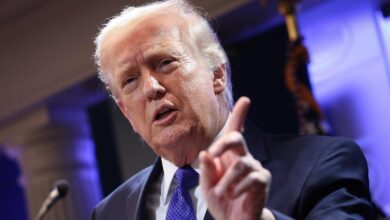
US jobs market weakens further in August

The latest data from the Labor Department has revealed that the US jobs market took a hit in August, sparking concerns about the overall health of the economy. Only 22,000 jobs were added last month, falling short of expectations, while the unemployment rate rose from 4.2% to 4.3%.
This disappointing news comes on the heels of a series of worrisome reports on the job market, including revised figures showing job losses in June – the first decline since 2020. Investors, who were already anticipating a cut to interest rates by the US central bank, now view this move as all but certain in response to the weakening labor market.
Olu Sonola, head of US economic research at Fitch Ratings, described the current state of the labor market as a “warning bell” that has only gotten louder in recent months. President Donald Trump’s response to the slowdown in August included firing the head of the Bureau of Labor Statistics, alleging, without evidence, that the numbers were manipulated to reflect poorly on him.
Analysts attribute the job market woes in part to the administration’s policies on tariffs and immigration, which have created uncertainty and raised costs for businesses. Additionally, government spending cuts and layoffs of federal workers have contributed to the decline in job growth.
The manufacturing sector has been particularly hard hit, with four consecutive months of job losses. Sonola pointed to tariff uncertainty as a major factor driving this weakness. Despite the slowdown in job creation, analysts note that the economy only needs to add around 50,000 jobs per month to keep pace with population growth.
Following the release of the report, stock markets opened slightly higher, and average hourly pay saw a 3.7% increase over the past year. Bond market rates also dropped as investors anticipated a Fed rate cut. Ellen Zentner, chief economic strategist at Morgan Stanley Wealth Management, noted that the market reaction indicated a focus on rate cuts rather than economic cooling.
White House officials acknowledged the disappointing job numbers but expressed optimism about future revisions painting a more positive picture. Some officials blamed the Federal Reserve and Chairman Jerome Powell for being slow to lower interest rates. White House press secretary Karoline Leavitt criticized Powell for hindering President Trump’s pro-growth agenda.
Recent data on job openings, unemployment claims, and the unemployment rate suggest ongoing challenges in the labor market. While the rate remains near historic lows, concerns linger about the overall health of the economy and the need for intervention to spur growth.