Vaccine policy protects individual rights, not public health, top CDC adviser says
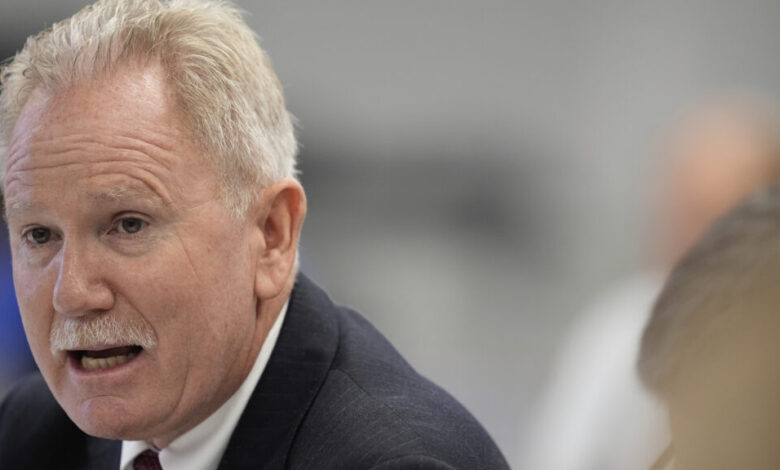
The chair of the federal vaccine advisory panel, Kirk Milhoan, has taken a controversial stance on vaccine recommendations and public health policy in a recent podcast interview. Milhoan, a pediatric cardiologist who assumed the role of chair of the Advisory Committee on Immunization Practices in December, outlined a new direction for the committee that emphasizes individual freedoms and autonomy over public health concerns.
In the podcast episode titled “Why Should I Trust You?”, Milhoan expressed skepticism towards established science on vaccines and suggested that policy goals, rather than scientific research, were the driving force behind recent changes in vaccine recommendations. He highlighted concerns about vaccine mandates and hesitancy as reasons for revising existing recommendations, such as delaying the age at which some children receive the hepatitis B vaccine.
The current members of the ACIP were selected by Health Secretary Robert F. Kennedy Jr. after he dismissed the previous members for alleged ties to the pharmaceutical industry. The new members, many of whom are vaccine critics, have made controversial recommendations such as removing thimerosal from flu vaccines and separating the measles, mumps, rubella, and varicella vaccines.
Milhoan emphasized the importance of individual autonomy in decision-making regarding vaccines, arguing that patients should have the freedom to choose based on their own assessment of risks and benefits. He criticized the American Academy of Pediatrics for not adequately informing patients about vaccine risks and accused them of promoting authoritarian vaccine policies.
Regarding the Covid-19 pandemic, Milhoan suggested that the messaging around Covid vaccines may have overstated their effectiveness. He also raised concerns about vaccine mandates and the impact they had on children’s access to education. Milhoan referenced data suggesting that children had died from Covid vaccines, a claim that has not been publicly verified by the FDA.
Despite his skepticism towards established science, Milhoan did not provide concrete evidence to support his claims. His remarks have sparked controversy within the medical community, with some experts questioning the validity of his statements. The podcast interview sheds light on the evolving landscape of vaccine policy and the challenges of balancing public health with individual rights. The use of the word “proven” in relation to vaccines has always been a contentious issue, with emotions running high on both sides of the debate. This was evident in a recent statement made by Milhoan, who criticized the previous iterations of the ACIP for not thoroughly considering the safety of vaccines. Despite previous instances where vaccines were pulled from the market due to safety concerns, Milhoan emphasized the need for an increased focus on safety within the new committee.
However, while acknowledging the importance of vaccine safety, Milhoan admitted to not having a new framework in place to evaluate vaccine safety. This admission raised concerns, especially considering his criticism of the CDC’s existing vaccine safety reporting system. He emphasized the need to understand why the current system is failing, indicating a lack of concrete solutions at the moment.
One of the key points raised by Milhoan was regarding the necessity of polio and measles vaccines in the current context. He questioned whether these vaccines are still essential, citing the changing landscape of sanitation and disease risk. While efforts have been made to eradicate polio globally, the resurgence of measles in the United States has raised doubts about the effectiveness of current vaccination strategies.
Milhoan’s remarks echoed the sentiments of others who have questioned the need for certain vaccines in light of modern advancements in healthcare and sanitation. He suggested that improved sanitation and reduced crowding could potentially control these diseases without the need for vaccines, a viewpoint shared by some vaccine skeptics.
Furthermore, Milhoan hinted at the importance of real-world data in assessing the risks posed by measles outbreaks. He emphasized the need to monitor the incidence of hospitalization and death among unvaccinated individuals to gauge the true impact of the disease.
Despite his stance on vaccine safety and effectiveness, Milhoan expressed a desire to maintain high vaccination rates to prevent disease and adverse outcomes. However, recent changes to vaccine policies and recommendations have raised concerns about the potential impact on vaccination rates and public health.
In conclusion, the debate surrounding vaccine safety and efficacy continues to evolve, with stakeholders expressing a range of opinions on the subject. Milhoan’s remarks highlight the complexity of the issue and the need for ongoing research and collaboration to ensure the best outcomes for public health.