Wealth inequality is worse than ever as K-shaped economy widens
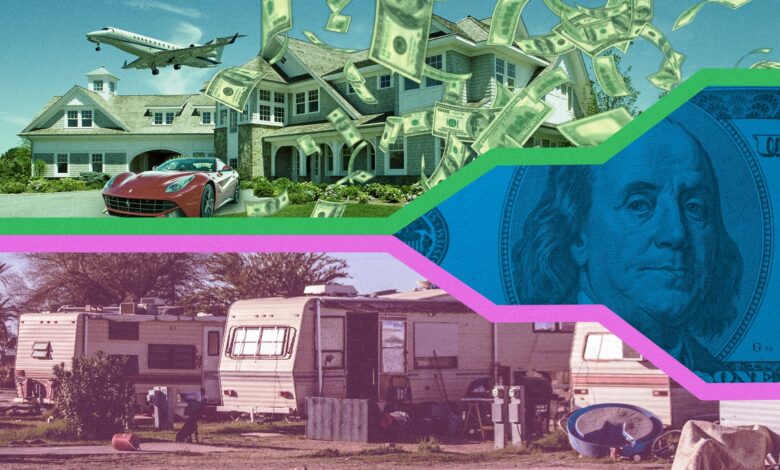
The growing wealth gap in America has become a pressing issue that economists believe will persist for the foreseeable future. The “K-shaped” economy, characterized by a divide between higher-earning individuals and lower-income groups, has become a structural feature rather than a temporary trend in the country’s economic landscape.
Higher-earning consumers, buoyed by rising stock prices and property values, are spending on luxury items and experiences, while lower-income households are struggling to afford basic necessities like housing and groceries. This disparity has only widened in recent years, with data showing that wealth concentration among the top 1% has reached record levels, while compensation for workers has declined to historic lows.
The impact of this economic divide is evident in consumer spending patterns, with higher-income households allocating more towards discretionary items like travel, while lower-income households are cutting back on such expenses. Overall, the top 20% of consumers are spending at multidecade highs, while the remaining 80% are seeing their spending power erode due to stagnant wages and rising inflation.
The roots of this K-shaped economy can be traced back to decades-old economic policies that have favored the wealthy and eroded the bargaining power of workers. The aftermath of the Great Recession further exacerbated this divide, leading to a “winner-take-all economy” where a small segment of the population benefits disproportionately from economic growth.
Looking ahead, economists predict that income inequality will continue to worsen unless significant reforms are implemented. Policies like tax reform and expanding social safety nets are seen as potential solutions to address the widening wealth gap. However, political gridlock and the rise of artificial intelligence, which could further displace workers, pose significant challenges to achieving a more equitable economic landscape.
Ultimately, the K-shaped economy highlights the fragility of the U.S. economy, which relies heavily on a few key sectors and income groups for growth. Without meaningful changes to address income inequality, the economy risks being destabilized by the disproportionate wealth and spending power of a small segment of the population.