Wells Fargo, Pfizer CEOs warn U.S. could lose out to China without innovation
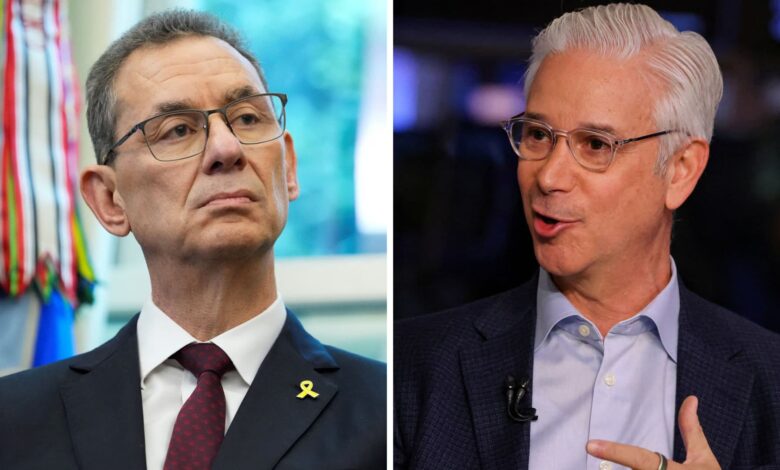
In a recent panel discussion at the Invest in America Forum, Wells Fargo CEO Charlie Scharf and Pfizer CEO Albert Bourla highlighted the growing threat of China overtaking the U.S. in key sectors. They emphasized the crucial role of artificial intelligence (AI) in helping America maintain its competitive edge.
Scharf and Bourla both acknowledged that the U.S. currently leads in various industries, but inconsistent policies and lack of investment are allowing China to catch up. They pointed out that AI presents both challenges and opportunities for the U.S. economy.
According to Scharf, AI is likely to lead to a reduction in workforce size but also boost productivity. He explained that tools implemented for coding have resulted in significant improvements in efficiency, leading to increased output without a corresponding decrease in headcount. Other big banks like JPMorgan and Goldman Sachs are already hiring fewer employees due to advancements in AI technology.
Scharf also predicted major regulatory changes in the financial sector despite political gridlock in Washington. He anticipated revisions in capital and liquidity requirements that would enable banks of all sizes to better serve their communities.
On the other hand, Bourla expressed concerns about China’s growing dominance in biotechnology and pharmaceuticals. He highlighted China’s substantial investments in research and development, regulatory reforms, and a national strategy focusing on life sciences. Bourla warned that China could surpass the U.S. in these fields unless significant changes are made.
Bourla urged the U.S. to shift its focus from trying to impede China’s progress to improving its own productivity and innovation. He stressed the importance of regulatory reforms and stability, emphasizing that tariffs and pricing measures were not effective in addressing the challenges posed by China.
In a recent agreement with the Trump administration, Pfizer secured a deal on drug pricing that included a three-year exemption from pharmaceutical-specific tariffs. Bourla emphasized the importance of removing uncertainties around pricing and Medicaid reimbursements to foster innovation and investment in U.S. manufacturing.
Moreover, Bourla highlighted the potential of AI in revolutionizing medicine, particularly in drug discovery. He predicted that AI could significantly accelerate the timeline for finding treatments for diseases like Alzheimer’s and cancer, offering new hope for patients worldwide.
Overall, Scharf and Bourla underscored the critical role of AI in shaping the future of American industries and urged policymakers to prioritize innovation and investment to maintain the country’s competitive edge in the global market.