What do Trump’s new tariffs mean for the economy? Experts weigh in
The stock market experienced a significant downturn on Friday following President Donald Trump’s announcement of new tariffs. This news, combined with a disappointing jobs report, raised concerns about the possibility of stagflation—a scenario where economic growth slows down while prices continue to rise.
Analysts from Moody’s Analytics, EY, and Fitch Ratings warned that the current situation could pose a challenge for the Federal Reserve. If the Fed decides to lower interest rates to combat the economic slowdown, it could further fuel inflation. Conversely, raising interest rates could push the economy into a recession.
The latest jobs data revealed a hiring slowdown in May, coinciding with the initial impact of tariffs. The U.S. added only 73,000 jobs in July, significantly below the average monthly job growth of 130,000 this year. Additionally, revisions to previous months’ job numbers indicated a much weaker labor market than previously estimated.
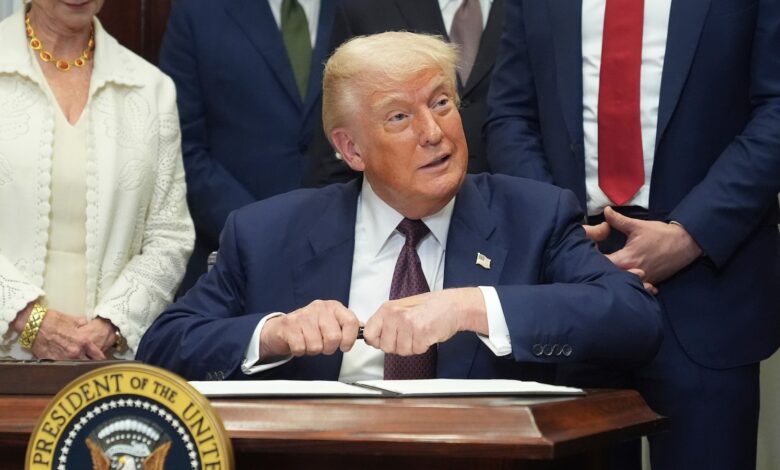
President Trump’s executive order imposing tariffs on nearly 70 countries further exacerbated the economic uncertainty. The average effective tariff rate now stands at 18.3%, the highest level since 1934. This move comes at a time when businesses are already grappling with increased costs and ongoing trade tensions.
The fluctuating tariffs have left companies uncertain about future expenses, leading to a potential slowdown in investment and hiring. Analysts predict a more pronounced economic slowdown in the second half of the year as businesses navigate the impact of tariffs on their operations.
Despite concerns about inflation, the U.S. economy has managed to avoid a significant price spike so far. However, analysts anticipate a gradual increase in inflation, with importers likely passing on some of the tax burden to consumers through higher prices.
As the Fed considers its options to address the economic challenges ahead, the prospect of stagflation complicates matters. Adjusting interest rates to combat inflation risks either stifling economic growth or exacerbating inflation. The central bank faces a difficult decision in deciding how to navigate the current economic landscape.
Overall, the combination of tariffs, hiring slowdown, and potential stagflation paints a complex picture for the U.S. economy. As policymakers and businesses grapple with these challenges, the road ahead remains uncertain.