What Is the Gold-Silver Ratio?
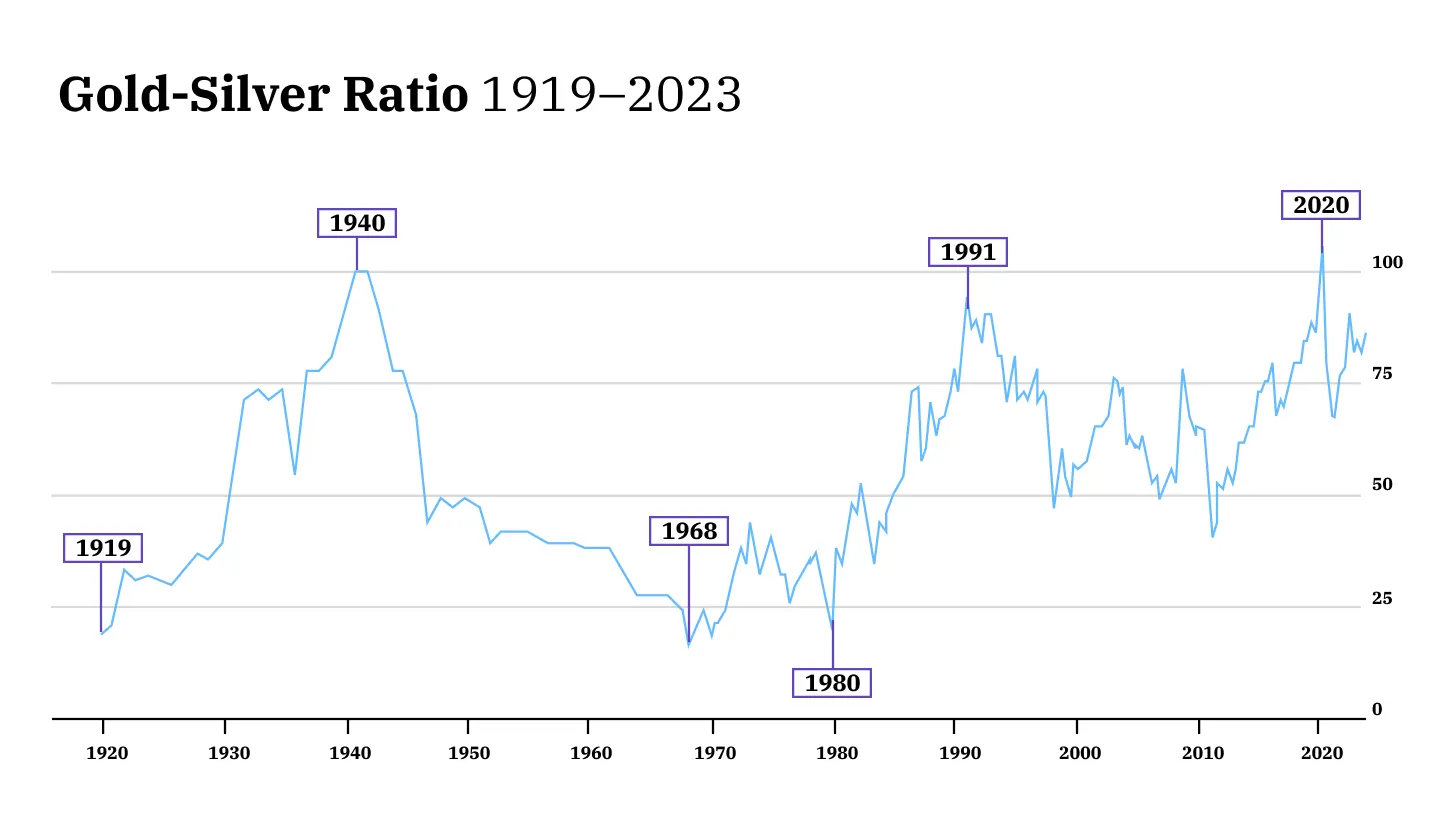
Gold and silver have long been prized for their value and versatility in various industries, from automotive to aerospace. The gold-silver ratio, which compares the prices of these two precious metals, has been a key tool for investors looking to navigate the market. As industrial demand has increased and the gold standard has been abandoned, the ratio has experienced fluctuations since 1933, presenting both challenges and opportunities for traders.
The gold-silver ratio is calculated by dividing the price of gold by the price of silver. This ratio has evolved over time, from the Roman Empire’s 12:1 ratio to a record high of around 125:1 during the height of the COVID-19 pandemic in April 2020. Understanding this ratio is crucial for investors as it can provide insights into the relative value of gold and silver, helping them make informed trading decisions.
Investors can use the history of the gold-silver ratio to analyze past trends and predict future shifts. By studying long-term averages and observing resistance levels, traders can identify opportune moments to trade gold or silver. It is important to consider external factors such as central bank reserves, currency valuations, and geopolitical unrest in conjunction with the ratio to make well-rounded investment decisions.
Monitoring the gold-silver ratio can also help traders recognize trading opportunities. By tracking the ratio’s movements and anticipating price changes, investors can strategically trade gold for silver when the ratio is high and vice versa. This strategy can potentially increase metal holdings over time, although it is essential to adjust trading strategies based on market conditions and risk tolerance.
While the gold-silver ratio is a valuable tool for investors, it has its limitations. Economic factors like oil prices, stock market performance, and currency fluctuations can influence the ratio, making it important to consider a comprehensive range of indicators before making investment decisions. Additionally, the ratio only reflects the relative value between gold and silver, not their absolute prices.
Various trading strategies can be employed using the gold-silver ratio, including mean reversion, momentum trading, hedging, pair trading, and ratio spreads. These strategies allow traders to capitalize on price differentials, trend movements, and market dynamics between gold and silver. By diversifying trading strategies and combining them with the insights provided by the gold-silver ratio, investors can optimize their precious metals trading.
In summary, the gold-silver ratio remains a valuable tool for investors seeking trading opportunities with precious metals. By understanding its history, monitoring its fluctuations, and implementing sound trading strategies, investors can make informed decisions in the ever-evolving market. While the ratio is a key indicator, it should be used in conjunction with other factors to ensure a well-rounded investment approach.