What to know about Adm. ‘Mitch’ Bradley, commander at the center of boat strike controversy
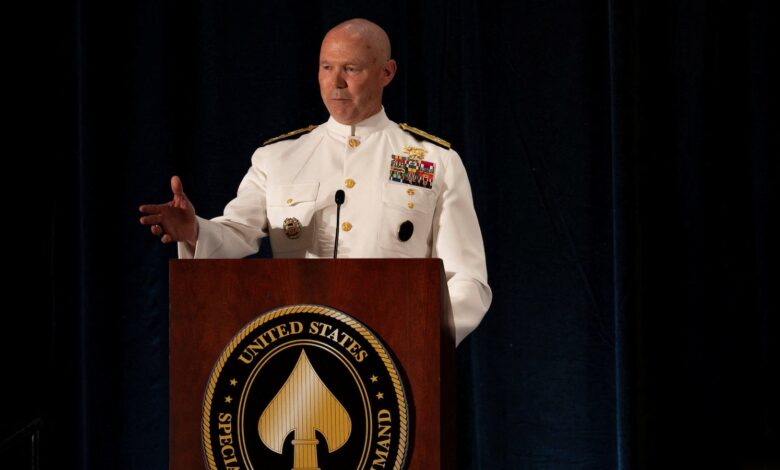
Adm. Frank “Mitch” Bradley, a seasoned Navy SEAL officer, has found himself at the center of a controversial incident involving strikes on an alleged drug-running boat in the Caribbean Sea. With an extensive background in special operations, Bradley has risen through the ranks to lead all U.S. special operators globally.
Bradley is set to brief lawmakers on Capitol Hill in a bipartisan inquiry into the September 2 strikes. The incident involved two survivors from the initial strike, who were later seen returning to the boat before being killed in a second strike. The decision to order the second strike was attributed to Bradley, with support from the White House and Defense Secretary Pete Hegseth.
As a three-star admiral commanding the Joint Special Operations Command, Bradley oversees sensitive missions carried out by elite units like SEAL Team Six and Delta Force. His military career began in 1991 when he graduated from the U.S. Naval Academy, excelling in physics and gymnastics. Bradley has commanded at various levels within U.S. special operations and was among the first to deploy into Afghanistan after the 9/11 attacks.
Originally from Eldorado, Texas, Bradley holds a Master’s Degree in physics from the Naval Postgraduate School, where he conducted research leading to a provisional patent in 2006. Colleagues describe him as one of the military’s best, praising his leadership and intelligence. Retired Navy Cdr. Eric Oelerich, a former SEAL, considers Bradley a mentor and admires his moral compass.
During his confirmation hearing for the four-star commander role at U.S. Special Operations Command, Bradley emphasized the importance of preventing civilian harm and upholding the laws of war. He reiterated his commitment to representing U.S. values and ensuring that all personnel under his command adhere to ethical standards.
The administration maintains that the individuals killed in the September 2 incident were terrorist combatants, justifying the use of lethal force in self-defense. However, legal experts, including former military lawyers, have raised concerns about the legality of targeting individuals who were no longer considered combatants.
Bradley’s leadership and decision-making in the September strikes have sparked a national conversation about the rules of engagement in special operations. As he continues to navigate the complexities of his role, Bradley remains dedicated to upholding the values of the U.S. military and ensuring the safety of both personnel and civilians in conflict zones.