What to know about EVs as the winter storm brings bone-chilling temperatures
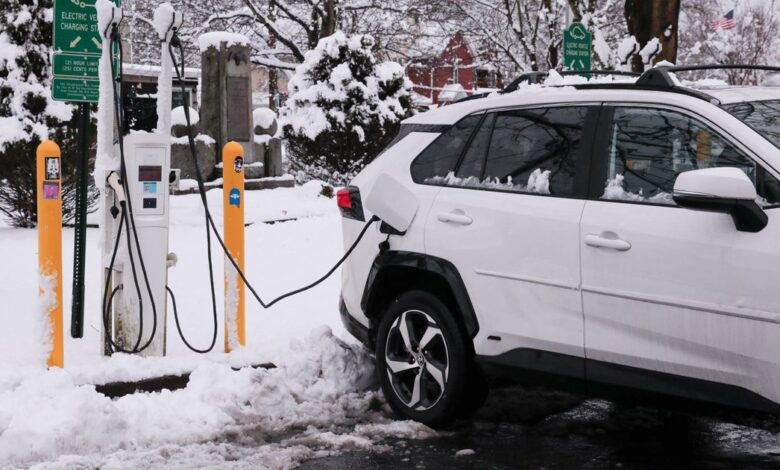
As a massive winter storm sweeps across the U.S., electric vehicle (EV) owners may face a cold reality: EVs can lose efficiency in low temperatures, impacting their driving ranges. This issue gained attention in January 2024 when some Tesla owners in the Chicago area discovered their EV batteries had died in subzero temperatures. Other EV owners have shared online about reduced ranges in winter conditions.
Cold weather can slow down an EV battery’s reactions, reducing power output. Unlike traditional cars with internal combustion engines that can use motor heat for cabin warmth, EVs rely on their batteries for heating, leading to decreased range. According to Consumer Reports, EVs lose about 25% of their range at 16 degrees Fahrenheit while driving at 70 mph compared to milder temperatures.
The ongoing extreme cold temperatures in the U.S. could pose a challenge for EV owners this weekend, with record lows expected in parts of the Southern Plains and Mid-Atlantic states. Temperatures in Minneapolis dropped to 21 degrees below zero, with wind chills making it feel even colder.
Newer EV models are designed to handle cold weather better. Manufacturers have incorporated heat pumps and improved battery enclosures to enhance battery efficiency in low temperatures. Kia, for instance, has introduced advanced heat pumps in its EVs that extract heat from the outside air and transfer it to the cabin, preserving energy for driving.
In countries with cold climates like Norway, where EVs make up 96% of new car sales, drivers have learned to cope with frigid weather. Some tips for EV owners in cold regions include preconditioning the battery by warming the cabin while the vehicle is plugged in, parking indoors or in covered spaces to shield from the cold, and minimizing energy usage by managing cabin temperature with features like heated seats and steering wheels.
By following these practices, EV owners can mitigate the effects of cold weather on their vehicle’s performance. As technology continues to improve, newer EV models are becoming better equipped to handle extreme temperatures, offering a more reliable driving experience in winter conditions.