What’s the best and worst that could happen for Labour?
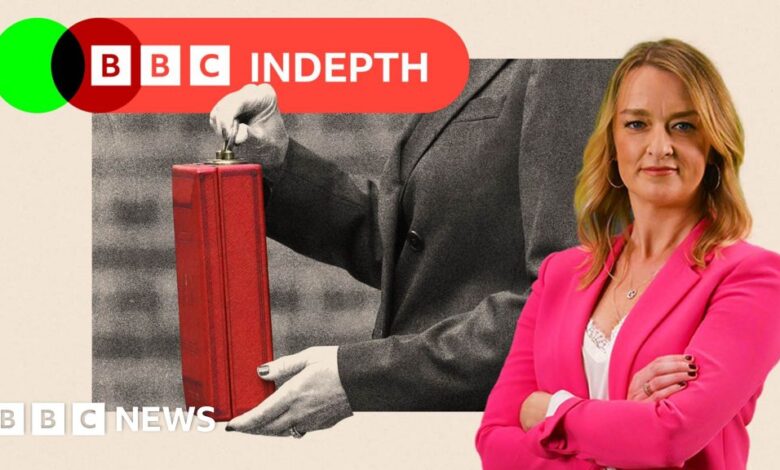
The recent Budget announcement by Chancellor Rachel Reeves has sparked a mix of reactions and speculations about what lies ahead for the Labour party and the UK economy. The decision to scrap the limit on benefits for larger families has been well received by Labour MPs, providing a much-needed morale boost. The move is seen as a clear example of Labour-friendly policy, redistributing cash to those in need and aligning with the party’s values.
While the policy may not be universally popular with the public, it has helped the party solidify its identity and manage internal divisions. With a significant majority in Parliament, Labour should not face challenges in maintaining party discipline, but past experiences have shown that this is not always the case. The hope is that the Budget changes will give Labour a clearer direction and a more unified front, allowing the party to focus on key issues and engage in productive debates.
Business leaders are cautiously optimistic about the Budget’s impact on the economy, hoping for stability and increased confidence. Despite concerns about tax hikes and rising debts, the absence of market turmoil following the Budget announcement is a positive sign. The hope is that this stability will translate into economic growth and investment, supporting businesses and boosting consumer spending.
However, early polling data suggests that the public may not be as receptive to the Budget measures as hoped. With more people facing increased taxes and inflationary pressures, the government will need to work hard to win over voters and improve its standing in the polls. The upcoming elections in Scotland, Wales, and various parts of England will be a crucial test for Labour and Keir Starmer, with their performance likely to influence the party’s future direction.
Overall, the Budget announcement has set the stage for potential opportunities and challenges for Labour and the UK economy. While the immediate reactions may be mixed, the long-term effects of the policy changes remain to be seen. As the government navigates its way through the aftermath of the Budget, it will need to strike a balance between addressing economic concerns and winning over public support. The political landscape in the UK is currently in a state of turmoil, with tensions rising within the Labour Party following a series of controversial decisions made by Prime Minister Keir Starmer and Chancellor Rachel Reeves. The recent Budget announcements have sparked a wave of discontent within the party, with one insider grimly joking that the best-case scenario for the PM would be a failed challenge.
However, the worst-case scenario seems to be unfolding as well. Just as the dust was settling on the Budget headlines, another political storm erupted over a partial U-turn on expanding workers’ rights. This move has left many party members baffled and frustrated, with some questioning the timing of the decision. The lack of cohesion within the party has raised concerns about the leadership’s ability to navigate through these turbulent times.
The ongoing negotiations with unions and businesses have also hit a roadblock, with disagreements over key issues threatening to derail the party’s agenda. The partial climbdown on workers’ rights has not gone down well with some factions within the party, further complicating an already tense situation.
Economically, the outlook is bleak. Debt levels remain high, growth forecasts are sluggish, and state spending continues to rise. The government’s focus on welfare and social programs has raised concerns among business leaders, who fear that the lack of emphasis on growth could stifle economic recovery.
Despite Starmer’s assurances that the government remains committed to fostering growth, there are growing doubts about the party’s ability to deliver on its promises. The shift towards a more traditional focus has alienated some business leaders, who feel betrayed by the government’s apparent disregard for their interests.
As the economy teeters on the brink of stagnation, there is a sense of unease among business owners and investors. The increase in minimum wage and taxes has raised fears that businesses may refrain from hiring, further exacerbating the economic downturn.
In the midst of this uncertainty, the Treasury is banking on external factors to turn the tide. Whether it’s advancements in technology, reforms in the planning system, or other unforeseen developments, the hope is that something will come along to rescue the economy from its current predicament. However, with tensions within the party running high and the economy on shaky ground, the road ahead looks fraught with challenges for the government. The current official predictions are causing quite a stir and are not providing much reassurance to the public. The Budget decisions being made could potentially further erode the trust that the public has in the government.
One of the main issues causing concern is the fact that the chancellor is going against previous promises by freezing the income tax threshold, effectively increasing taxes for many individuals. This move goes directly against the party’s election manifesto, leaving many feeling betrayed. Additionally, there are accusations that the government misled the public about the state of the country’s finances leading up to the Budget announcement.
It seems that the chancellor had been hinting at tax rises for weeks leading up to the Budget, preparing the public for the inevitable. However, recent revelations from the Office for Budget Responsibility suggest that there may not have been a financial shortfall after all. This has led to accusations of lying and deception from opposition parties and even some within the government.
The Budget process has been messy and has potentially damaged the government’s credibility even further. The public’s trust is fragile, and any missteps can have lasting consequences. While the Budget may not have completely fallen apart, the economic outlook remains uncertain, and the political fallout could be significant.
In the end, the government must work to rebuild trust with the public and ensure that decisions are made transparently and in the best interest of the country. The financial landscape may be challenging, but honesty and integrity are essential in navigating these turbulent times. The sun was setting on the horizon, casting a warm golden glow over the tranquil landscape. The birds were singing their evening melodies as they flew back to their nests, while the gentle breeze rustled the leaves of the trees. It was a peaceful scene, a moment of serenity in the midst of a bustling world.
As the sky turned various shades of pink and orange, a sense of calm washed over the land. The fading light painted the clouds in hues of purple and blue, creating a breathtaking canvas in the sky. The beauty of nature was on full display, a reminder of the wonders that surround us every day.
In the distance, the silhouette of the mountains stood tall against the colorful sky. Their majestic peaks seemed to touch the clouds, a reminder of the power and grandeur of the natural world. The mountains were a symbol of strength and resilience, standing firm against the test of time.
As the sun dipped below the horizon, the sky darkened and the stars began to twinkle in the night sky. The moon rose slowly, casting a soft, silvery light over the landscape. It was a magical moment, a time when the world seemed to slow down and everything felt peaceful and still.
The night was alive with the sounds of nature – the chirping of crickets, the hooting of owls, and the rustling of leaves in the wind. The air was filled with the scent of flowers and earth, a sweet and earthy aroma that enveloped the senses.
As the night deepened, the sky filled with more stars, creating a dazzling display of light against the dark canvas. The Milky Way stretched across the sky, a river of stars that seemed to go on forever. It was a sight that filled the heart with wonder and awe, a reminder of the vastness and beauty of the universe.
In that moment, surrounded by the beauty of nature under the night sky, all worries and cares seemed to melt away. It was a time to pause, to reflect, and to appreciate the simple joys of life. As the night wore on, the world seemed to hold its breath, waiting for the dawn to break and the cycle of life to begin anew.
And so, under the blanket of stars and the watchful gaze of the moon, the world slept peacefully, knowing that the beauty of nature would always be there to comfort and inspire. The night was a reminder of the magic and wonder that surrounds us, a gift that we should cherish and protect for generations to come. The Importance of Renewable Energy Sources
As our world continues to grapple with the effects of climate change and the depletion of natural resources, the importance of renewable energy sources has become increasingly apparent. Renewable energy sources, such as solar, wind, hydroelectric, and geothermal power, offer a sustainable and environmentally-friendly alternative to traditional fossil fuels.
One of the primary benefits of renewable energy sources is their ability to reduce carbon emissions and combat climate change. Unlike fossil fuels, which release harmful greenhouse gases into the atmosphere when burned, renewable energy sources produce little to no emissions. This helps to mitigate the negative impacts of global warming and reduce our reliance on finite resources.
In addition to their environmental benefits, renewable energy sources also offer economic advantages. The renewable energy industry has seen significant growth in recent years, creating new jobs and stimulating economic development. By investing in renewable energy infrastructure, countries can reduce their dependence on imported fossil fuels and bolster their energy security.
Furthermore, renewable energy sources are more sustainable in the long term. Fossil fuels are finite resources that will eventually run out, leading to increased prices and potential energy shortages. In contrast, renewable energy sources are abundant and can be harnessed indefinitely, providing a reliable and sustainable source of power for future generations.
Another important aspect of renewable energy sources is their potential to decentralize power production. Unlike traditional power plants, which are often located far from urban centers and require extensive transmission infrastructure, renewable energy sources can be implemented on a smaller scale closer to where energy is needed. This can help to reduce transmission losses and increase energy efficiency.
Overall, the importance of renewable energy sources cannot be overstated. They offer a clean, sustainable, and economically viable alternative to fossil fuels, helping to combat climate change, create new jobs, and ensure a reliable source of energy for the future. By investing in renewable energy infrastructure, countries can reduce their environmental impact and build a more sustainable energy system for generations to come.