Where OBBBA delivers the biggest tax cuts
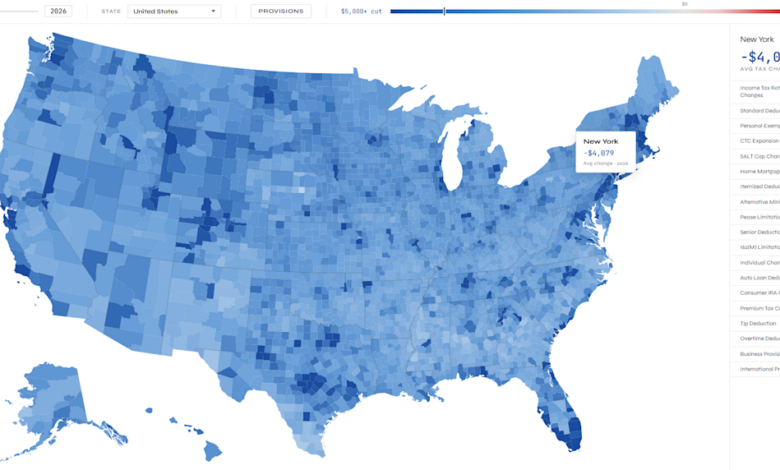
After months of anticipation surrounding President Donald Trump’s One Big Beautiful Bill Act (OBBBA), financial advisors and clients are now experiencing the impact this tax filing season. The Tax Foundation, a nonpartisan organization, has released data detailing how the changes brought about by OBBBA will affect individual taxpayers across the nation. This data provides a comprehensive view of the law’s implications for households and offers valuable insights for planning strategies.
The Tax Foundation’s analysis of OBBBA took into account key provisions such as adjustments to itemized deductions, charitable contributions, standard deductions, and more. By utilizing a general equilibrium model and distributing the changes to counties based on IRS data, the researchers were able to provide a county-by-county view of who benefits or pays more under the law.
According to the Tax Foundation, the average tax cut per filer in 2026 will be $3,813, driven by both individual and business tax changes under OBBBA. Individual tax changes, including expanded deductions and credits, contribute approximately $2,272 to the average cut, while business tax provisions add around $1,541 per taxpayer. The researchers project that the average tax cut will decrease to about $2,590 in 2030 as some deductions phase out but will rise again to around $3,163 by 2035 due to inflation.
Despite the overall benefits of the law, there are significant geographic disparities in the average tax cuts. States like Wyoming, Washington, and Massachusetts will see the largest average tax cuts in 2026, while states such as West Virginia and Mississippi will receive the smallest cuts. Counties with higher-income households and business owners, such as Teton County, Wyoming, will experience substantial average cuts, while more rural counties will see smaller reductions.
The Tax Foundation attributes much of the projected tax relief to OBBBA making the individual income tax provisions of the 2017 Tax Cuts and Jobs Act permanent. By locking in these rates, brackets, and deduction rules, the law prevents a tax increase for a significant portion of filers in 2026.
In addition to making existing provisions permanent, OBBBA introduces new deductions for tipped income and overtime pay, expands the child tax credit and standard deduction, and includes business-friendly provisions such as 100% bonus depreciation and full expensing for domestic research and development.
With these changes in mind, it is crucial for advisors to tailor tax planning strategies to each client’s specific circumstances, considering factors like geography and income group. The law’s impact on the state and local tax deduction, estate and gift exemptions, and charitable giving should all be carefully evaluated to ensure optimal results for clients.
As OBBBA continues to shape the tax landscape, advisors must stay vigilant in monitoring the evolving provisions and adjusting strategies accordingly. By staying informed and proactive, advisors can help clients navigate the complexities of the new tax law and maximize its benefits.