White House ballroom: Judge signals skepticism of Trump administration arguments
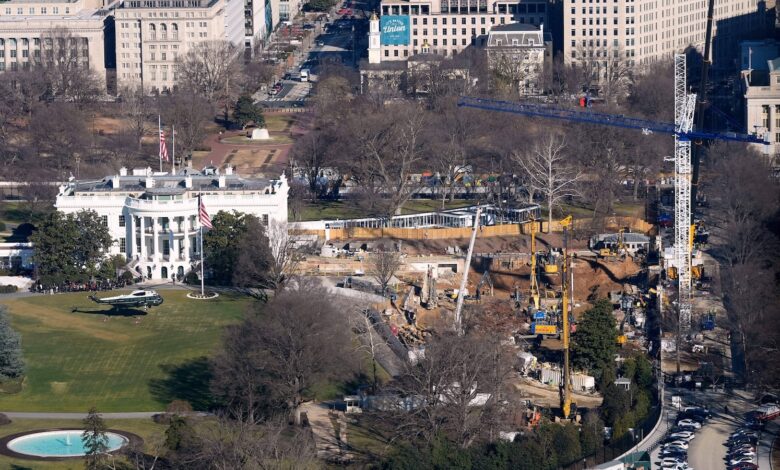
The battle over the construction of a new ballroom in the White House continues, with a federal judge expressing skepticism about the Trump administration’s legal authority to proceed with the project. The National Trust for Historic Preservation filed a lawsuit seeking to halt the construction until the proper federal review process is completed and public comment is obtained.
During a hearing on Thursday, U.S. District Court Judge Richard Leon questioned the administration’s argument that President Trump has the power to tear down part of the historic East Wing and fund the renovations with private donations. Judge Leon described the proposed funding mechanism as a “Rube Goldberg contraption” designed to evade congressional oversight.
The National Trust, a nonprofit organization dedicated to preserving historic sites, is seeking a preliminary injunction to stop the project. Judge Leon indicated that he would likely not issue a decision until February and anticipated that the losing side would appeal.
The White House announced plans for the 90,000-square foot ballroom in July, and demolition of the East Wing began in October. The cost of the project has ballooned from an initial estimate of $200 million to $400 million, with the White House insisting that it will be funded by private donations.
Judge Leon, appointed by President George W. Bush, expressed concerns about the administration bypassing congressional oversight by privately raising funds for the project. He urged the Justice Department’s lawyer to provide a solid legal rationale for the plan.
The fate of the White House ballroom project remains uncertain as legal battles continue to play out in court. The outcome of this case could have far-reaching implications for the balance of power between the executive and legislative branches of government. Stay tuned for updates as the case unfolds. The legal battle over President Donald Trump’s plan to demolish and rebuild the White House ballroom has taken a dramatic turn as a federal judge questioned the legality of the project. The judge, Richard J. Leon, focused on key federal statutes that prohibit construction on federal public grounds without express authority from Congress and require yearly appropriations for White House maintenance.
During the hearing, Leon raised concerns about the lack of congressional approval for the project, noting that Republicans control both houses of Congress. He also questioned the use of National Park Service gift authority to raise funds for the ballroom, suggesting that it was not intended for such large-scale projects.
The Justice Department argued that Trump sought alternative funding sources to avoid using taxpayer money for the project. However, Leon expressed skepticism about the legality of using gift authority to raise $400 million for a new White House ballroom, calling it “unprecedented.”
Representing the National Trust, attorney Adam Gustafson emphasized that Trump is a temporary tenant, not the owner, of the White House. Leon echoed this sentiment, suggesting that Trump’s role as president does not give him ownership rights over the historic building.
As the hearing continued, the judge rejected arguments that the National Trust lacked standing to sue over the project. He made it clear that he was comfortable with the organization’s legal standing and expressed a commitment to thoroughly evaluate the case.
The outcome of the legal battle remains uncertain, but the judge’s questioning of the project’s legality raises significant doubts about the feasibility of Trump’s plan to rebuild the White House ballroom. As the case unfolds, it will likely continue to draw attention and spark debate over the limits of presidential authority and the protection of historical landmarks. The ongoing legal battle over the construction at the White House took an interesting turn recently, as the National Trust for Historic Preservation sought a preliminary injunction to halt the project. However, during a court hearing, Judge Leon was hesitant to issue an immediate order, citing potential risks to the existing structure and security concerns.
Attorney Roth, representing the government, argued that stopping construction at this stage could put the White House at risk of damage, especially since there are plans for a new underground bunker as part of the project. The National Trust, on the other hand, expressed willingness to allow work to continue on the security-related aspects of the construction.
Roth emphasized the interconnected nature of the project, stating that separating out the security-related work would be impractical without court oversight. He warned that without proper coordination, the court would essentially have to micromanage the construction process.
Judge Leon, considering the impending winter storm and its potential impact on the construction timeline, decided not to issue a ruling from the bench. He indicated that a decision on the National Trust’s motion for a preliminary injunction would likely be delayed until the end of the month.
As the legal proceedings continue, the fate of the White House construction project remains uncertain. The complex interplay of historic preservation, security concerns, and legal considerations highlights the challenges faced by all parties involved. Stay tuned for further updates on this intriguing case.