World Bank cuts 2025 growth outlook to 2.3% as trade tariffs weigh
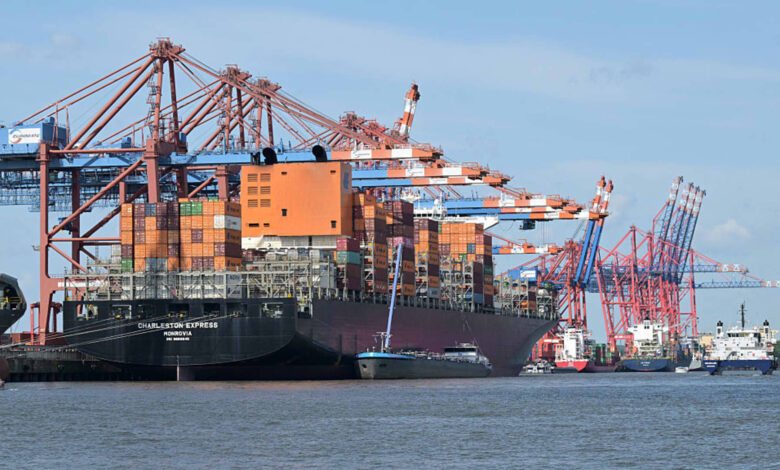
The World Bank recently revised its global economic growth projections, citing trade uncertainty as a major factor contributing to the downgrade. The organization now anticipates a 2.3% expansion in the global economy for 2025, a significant decrease from its previous forecast of 2.7%.
According to the World Bank’s Global Economic Prospects report, this projected growth rate would be the slowest since 2008, excluding periods of global recessions. Trade uncertainty, in particular, has been highlighted as a key driver behind the subdued outlook.
Indermit Gill, the senior vice president and chief economist of The World Bank Group, emphasized the impact of international discord on policy certainties that have historically supported poverty reduction and economic prosperity post-World War II. The report also adjusted growth forecasts for specific regions, with the U.S. seeing a 0.9 percentage point reduction to 1.4% and the euro area experiencing a 0.3 percentage point decrease to 0.7%.
The World Bank warned that a further escalation of trade tensions could drag global growth even lower. However, the outlook could improve if major economies reach lasting trade agreements. Gill suggested that resolving current trade disputes with agreements that reduce tariffs could boost global growth by an average of 0.2 percentage point over 2025 and 2026.
Currently, negotiations are ongoing between the U.S. and various trading partners, including China and the European Union. Recent talks between the U.S. and China in London have resulted in a temporary reduction of tariffs, while discussions with the European Union are still in progress ahead of impending tariff deadlines.
The World Bank’s downward revision aligns with similar forecasts from other organizations like the Organisation for Economic Co-operation and Development (OECD). The OECD also pointed to trade and tariff-related uncertainty as a primary factor in projecting a slowdown in global growth to 2.9% for 2025, down from its previous estimate of 3.1%.
As trade tensions continue to impact the global economy, policymakers and stakeholders are closely monitoring developments in hopes of reaching agreements that will support economic stability and growth.