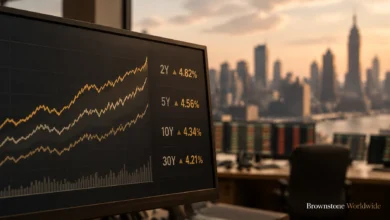
Andrew Ross Sorkin on worrying similarities between Wall Street today and 1929’s pre-crash market

Is Another Wall Street Crash on the Horizon?
Financial journalist Andrew Ross Sorkin, after years of studying the infamous stock market crash of 1929, is sounding the alarm bells about the current state of Wall Street. He believes that the parallels between today’s market and that of the 1920s are too close for comfort, with a potential crash looming on the horizon.
Despite a recent dip in the market, stocks have been on a steady rise, reminiscent of the roaring ’20s. Sorkin, author of “1929: Inside the Greatest Crash in Wall Street History,” warns that the current economy is propped up by the artificial intelligence boom, raising concerns about the sustainability of this growth.
While Sorkin acknowledges the unprecedented boom in technology and AI, he remains cautious about the future. “I just can’t tell you when, and I can’t tell you how deep,” he said. “But I can assure you, unfortunately, we will have a crash.”
Lessons from the Great Depression
The market crash of 1929 was fueled by rampant speculation and excessive borrowing, leading to a devastating economic downturn. Sorkin highlights how ordinary investors, enticed by the promise of quick gains, were lured into the market using borrowed money, a practice known as buying on margin.
In the years following the crash, regulations and agencies were put in place to protect investors and prevent another financial catastrophe. However, Sorkin points out that some of these safeguards are now being eroded, with the SEC rules becoming less stringent and consumer protection measures weakening.
Today, the rise of AI and technology has led to a surge in investment, with some experts warning of a possible bubble. Sorkin raises concerns about the increasing levels of speculation and debt in the market, coupled with the dismantling of regulatory barriers.
The Push for Democratizing Investing
There is a growing push to democratize investing and provide access to previously restricted assets, such as private equity and venture capital. While this presents new opportunities for investors, it also comes with heightened risks. Sorkin warns that opening up the market to more people may require compromising on the protective guardrails put in place to prevent exploitation.
BlackRock CEO Larry Fink has advocated for expanding investment options in retirement accounts to include riskier assets like private investments and cryptocurrencies. While Fink sees these as opportunities for diversification, Sorkin cautions against the potential pitfalls, citing examples of speculative investments like meme coins.
In a market where uncertainty looms large, the lessons of the past serve as a stark reminder of the dangers of unchecked speculation and excessive risk-taking. As Wall Street teeters on the brink of another potential crash, the need for vigilance and prudent investing practices has never been more critical.