Rents around the U.S. are growing more slowly than they have in years

Great news for renters, with a hint of less favorable news.
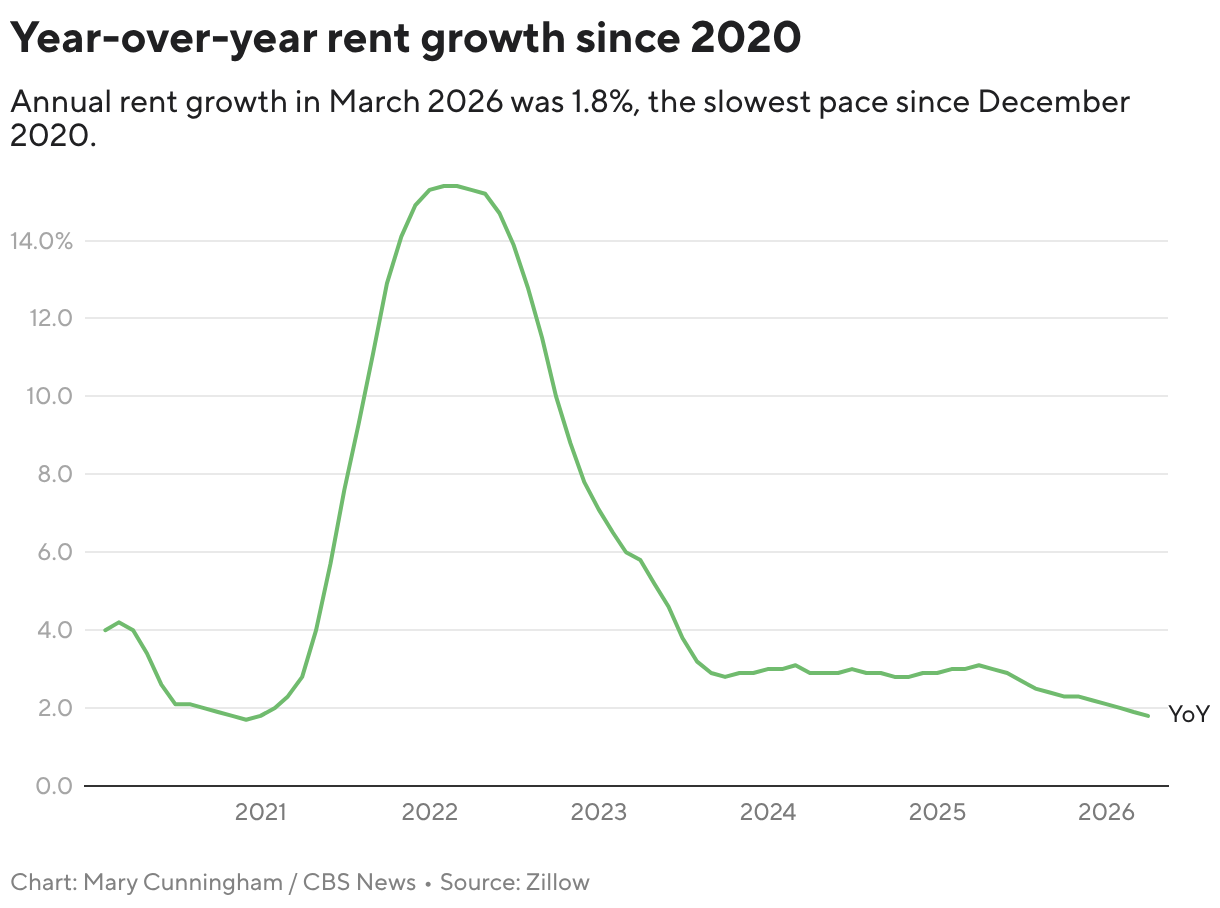
As of March, the average monthly rent was $1,910, marking a 1.8% increase from the previous year. This growth rate is the slowest since December 2020, according to a recent report by Zillow study.
Zillow senior economist Kara Ng mentioned to CBS News that rents had spiked post-pandemic due to high demand meeting limited supply and strong financial support. However, the growth is now decelerating as new supply enters the market, demand stabilizes, and affordability constraints curb landlords’ pricing power.
On a positive note, people’s incomes increased more rapidly in March compared to rental costs, providing some financial relief for renters.
Zillow’s data revealed that single-family rents rose by 2.5% annually in March, the slowest rate since 2015 when the data collection began. Single-family homes encompass attached or semi-attached row houses, duplexes, quadruplexes, and townhomes. Multifamily home rents stood at $1,757 in March, showing a 1.3% increase from a year ago.
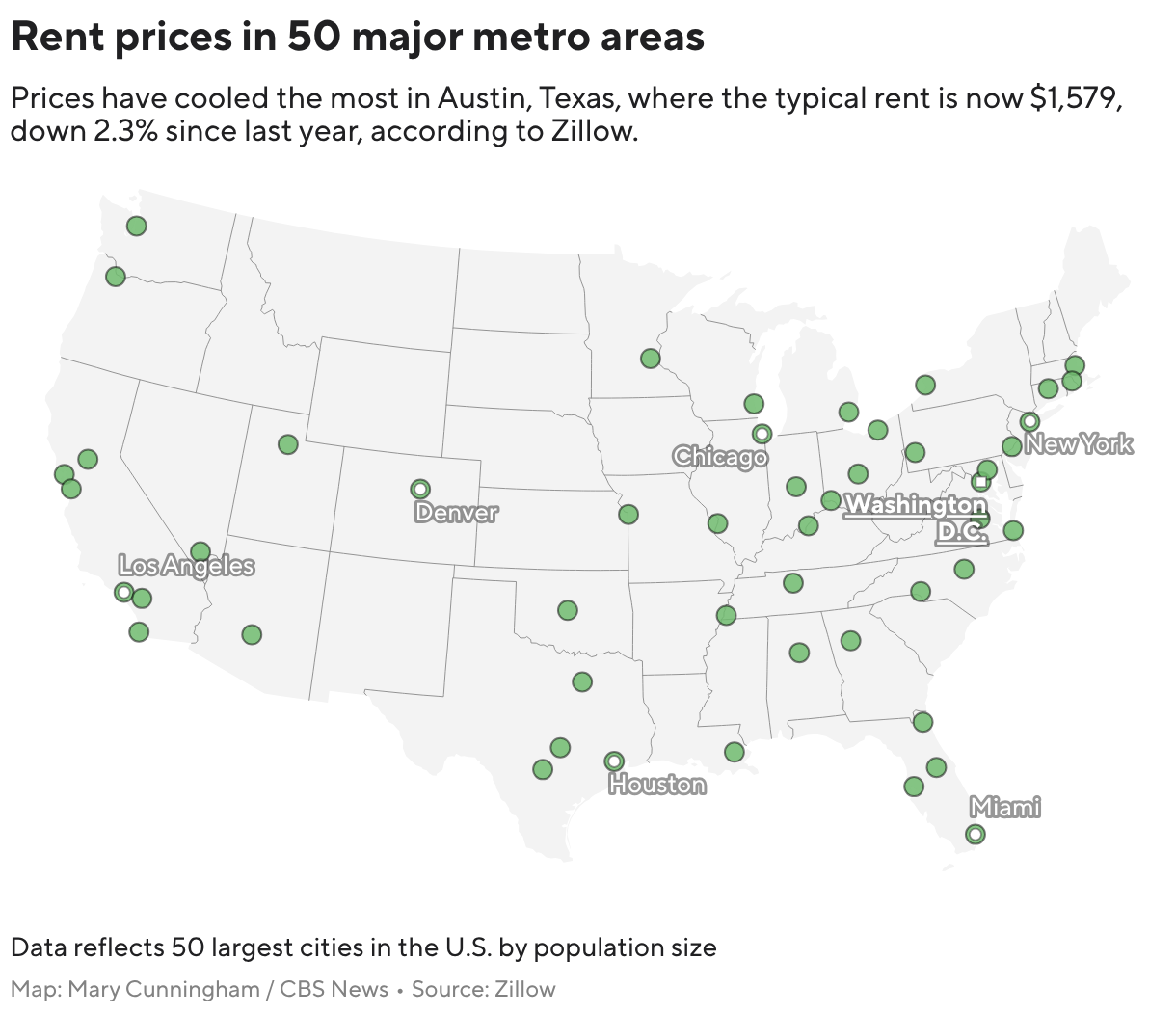
Among major U.S. cities, Austin, Texas experienced the most significant cooling in monthly rents, with prices dropping by 2.3% in March compared to the previous year. Tampa, Florida, and San Antonio, Texas also saw a 1.6% decrease in rents year over year, as per Zillow’s findings.
Despite the moderation in rental costs, a substantial portion of Americans still allocate a significant portion of their income towards rent. Zillow reported that the median household spent 26.5% of its income on rent in the previous month.
Furthermore, a household needs to earn at least $76,400 annually to comfortably afford the average monthly rent of $1,910—a 35% increase from pre-pandemic levels. The data indicates that single-family rents have surged by almost 45% since early 2020, while multifamily rents have risen by 28% during the same period.