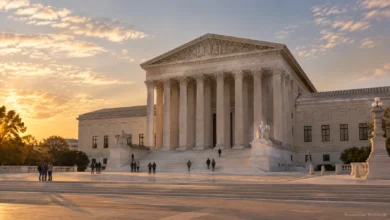
SF DA Brooke Jenkins warns of ‘devastating’ court ruling

San Francisco District Attorney Brooke Jenkins has raised concerns over a recent court ruling that she believes will have dire consequences for public safety in California. The ruling, issued by the California Supreme Court on April 30, states that bail for accused criminals must be “attainable” and only those accused of violent crimes can be held in jail pending trial. Jenkins, who has been tough on drug dealers and petty thieves in San Francisco, argues that this ruling will make it extremely challenging to keep repeat offenders behind bars, even if they have a history of arrests or have violated court orders.
Under the new legal precedent, only individuals accused of violent crimes such as murder and assault involving bodily harm can be held on an “unattainable” bail or without bail. This means that accused repeat drug dealers, auto burglars, retail thieves, and felons in possession of guns could potentially be released back into the community. Jenkins expressed her concern, stating that the ruling will have devastating effects on public safety in San Francisco and across the state.
The California Supreme Court case that led to this ruling involved Gerald John Kowalczyk, a homeless man from the Bay Area who used someone else’s credit card to purchase a $7 cheeseburger. Despite having a history of 60 prior convictions and failing to comply with court orders, Kowalczyk spent six months in jail after his bail was set at $75,000 and later revoked. His attorneys argued that his detainment was unconstitutional as he had not been convicted of a crime and was unable to afford bail due to his homelessness and joblessness.
Civil rights advocates successfully argued that courts cannot disproportionately punish defendants for being too poor to pay bail. However, Jenkins believes that this “ivory tower” logic does not align with the reality on the ground. San Francisco has been grappling with rampant auto theft, open-air fentanyl sales, and organized retail crime, leading to embarrassing headlines for the city. Serial offenders like Robert Sonza, who has been arrested multiple times for various crimes, and Aziza Graves, who was accused of stealing $60,000 worth of goods from a Target store, are just a few examples of the challenges the city faces.
Following the Supreme Court ruling, defense attorneys in San Francisco requested the release of over 90 offenders held for drug dealing, theft, and other crimes. One such offender, a woman with a history of robbery and theft, was released with an electronic monitor after the ruling. Jenkins highlighted that swift detention and consequences have been effective deterrents to crime in the city, and she fears that this ruling will reverse the progress made in reducing crime rates.
Despite falling crime rates in San Francisco, Jenkins emphasized that the threat of swift detention is crucial in deterring criminals. She expressed disappointment in the judges’ ruling, stating that they seem disconnected from the reality of the community and the challenges faced by law enforcement and prosecutors. Jenkins believes that until there are changes in the court system, the city will continue to struggle with crime and face criticism from media outlets like Fox News.
In conclusion, Jenkins described the recent ruling on bail as “devastating” for public safety and called for a reevaluation of the judicial system to address the challenges faced by law enforcement in ensuring the safety of the community.