Oil exports through Hormuz might not return to levels before Iran war

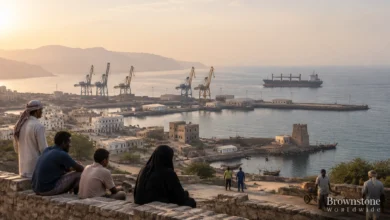
The oil market may be facing a new reality post the Iran war, where exports through the Strait of Hormuz may not return to previous levels due to the risk of potential conflicts in the volatile Persian Gulf. Western commercial ships may be hesitant to sail through Hormuz if it remains under Iran’s control, especially with the risk of violating U.S. sanctions. This uncertainty could have unforeseen consequences given the strait’s crucial role in global energy markets.
Iran’s blockade of Hormuz has caused the largest oil supply disruption in history, putting pressure on the U.S. to negotiate a deal as the threat to the global economy grows. According to Amos Hochstein, a former senior energy and national security advisor, it is widely believed in the region that Iran has already taken control of Hormuz, making it a strategic point of interest.
Helima Croft, from RBC Capital Markets, predicts that if Iran maintains control over the strait, oil tanker traffic might only reach 60% to 70% of prewar volumes. This scenario could lead to a permanently divided strait where passage is determined by political alignment, rather than freedom of navigation.
The crisis in the Red Sea, caused by Houthi militants attacking commercial ships in response to regional conflicts, serves as a cautionary tale of how geopolitical instability can disrupt trade chokepoints for extended periods. The Red Sea traffic has yet to return to normal levels even after the attacks ceased.
Tomer Raanan and Jack Kennedy emphasize that the Red Sea differs from Hormuz as ships can bypass it by sailing around the Cape of Good Hope. Hormuz, on the other hand, lacks equivalent alternatives and remains crucial for global energy markets.
Middle East exporters are exploring alternatives to Hormuz, with the UAE accelerating the construction of a second pipeline to bypass the strait. U.S. Energy Secretary Chris Wright believes that the significance of Hormuz in the global energy market may decline as Gulf nations develop more pipeline routes.
“This is a card you can play once,” Wright said, referring to Iran’s blockade. “There’ll be other routes for energy to get out of the Persian Gulf.”