Bulldozers in Big Bend Spark Outcry as Border Wall Construction Begins in Texas National Park
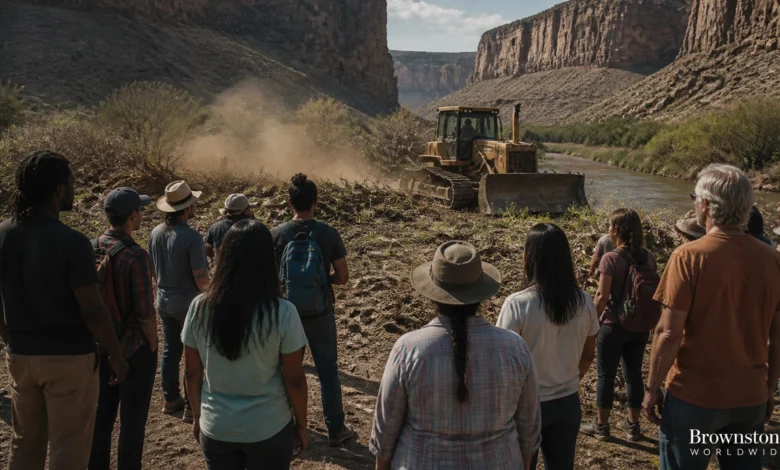
Bulldozers and other heavy equipment have moved into Big Bend National Park, where contractors are clearing desert vegetation near the Rio Grande. The work, documented this month near Santa Elena Canyon and other park areas, has sparked protests from residents, river guides, conservationists and former park officials.
The project is part of a reported $1.72 billion border-security initiative. Customs and Border Protection says it is not building a 30-foot steel wall inside the park. Instead, officials describe plans involving patrol roads, surveillance technology, one new access road and vehicle barriers in limited locations. CBP Commissioner Rodney Scott said current activity involves survey and design work intended to help agents respond to crossings and emergencies. (NPR; CNN)

For opponents, the distinction between a traditional wall and a network of roads, barriers, sensors and lights does not resolve the central concern: permanent changes to a protected landscape. They warn that construction could disturb wildlife habitat, archaeological resources, river access and the dark skies that draw visitors to Big Bend. Federal environmental and historic-preservation protections have been waived to speed the work, according to federal filings and advocacy groups.
The debate is also shaped by border data. The Big Bend sector recorded the fewest encounters among the major Southwest border sectors in fiscal year 2025, according to CBP statistics. Local critics argue that technology and existing terrain may provide security without extensive ground disturbance.

At a recent rally near Santa Elena Canyon, roughly 150 people gathered with signs and speeches opposing the project. The coalition includes people from across the political spectrum, including landowners, business owners and law-enforcement voices. Advocacy group No Big Bend Wall continues to organize public information efforts and legal challenges.
Visitors should check the National Park Service’s current conditions before traveling, respect closures and stay away from active work zones. Following official notices, local reporting and court developments can help residents and travelers understand what changes next.

Big Bend’s future now depends on decisions involving security, conservation, public access and community trust. Should border infrastructure in national parks prioritize physical barriers, technology or a different approach? Share your view and follow continuing coverage from Brownstone Worldwide.