Good Intentions Fail for Boring Reasons: Here’s the Fix
Good intentions rarely fail because people stop caring. They usually fail for reasons so ordinary they barely seem worth naming. Nobody was clearly in charge. Nobody had a free weekday evening once real life started moving. The whole idea lived inside a group chat where messages kept sliding upward. The plan happened once, felt meaningful for a day, and then never had a next date.
When kindness has no container
That is the frustrating part of community care: sincerity is not the hard part. Logistics are. A food drive, a check-in for an older neighbor, a shelter visit, a stack of books set aside for someone who will use them well — all of it can begin with real heart and still fall apart because the structure was too loose to survive a busy week.
October’s National Book Month and Adopt a Shelter Dog Month make that lesson easy to see. People often want to help. They just build the helping plan like a wish instead of a routine.

The quiet reasons plans stall
Most stalled generosity follows a familiar script. No one person was named to hold the plan, so everyone assumed somebody else would follow up. The best available time was a random weekday evening that looked open on Monday and impossible by Thursday. Important details stayed buried in a chat thread instead of being written somewhere clear. And because it was treated as a one-off, there was no next date waiting when the first effort ended.
The fix is smaller than people think
The repair is not dramatic. Name one person to hold the plan. That does not mean one person does everything. It means one person knows what is happening next and notices when the effort starts drifting. Then pick a recurring slot instead of a single heroic event: one dependable morning, one standing afternoon, one repeatable block that can live on the calendar without fresh debate every time.
Decide the minimum version that still counts on a bad week. Maybe it is one bag packed, one shelf sorted, one dog-walking shift covered, one neighbor checked on, one delivery made. If the smaller version still matters, the larger commitment has a better chance of lasting.

Make helping easier before help is needed
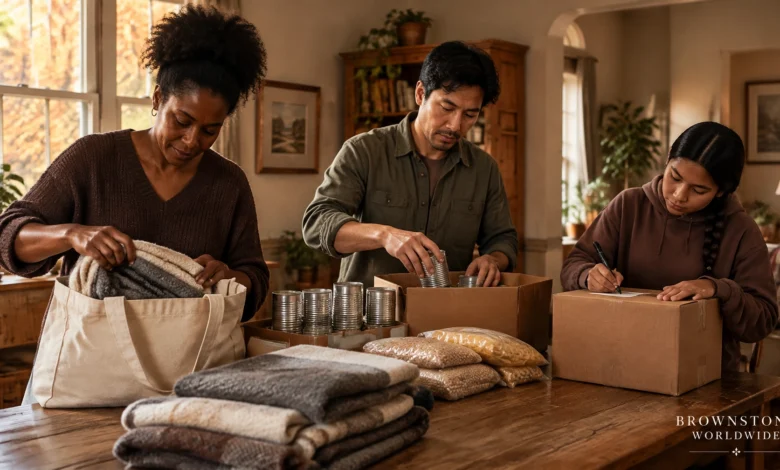
It also helps to keep a small state of readiness by the door so generosity does not depend on a special shopping trip. A box, a shelf, a hook, a simple spot for useful items can turn intention into motion. The goal is not stockpiling. The goal is removing one more excuse.
In the same spirit, keeping a current note of who on the block might need a hand beats relying on memory. Seasons change. Health changes. Work shifts. School schedules flip. A written note helps you remember who may need a check-in, who prefers privacy, and who said yes to practical help.

Systems are kinder than grand gestures
The wider point is simple: repeatable systems are kinder than grand gestures. They ask less from people in any single moment and give more over time. That is true whether the commitment is a neighbor, a shelter dog, a community shelf, or a food drive that returns often enough to become trusted. What could your household make easy enough to repeat? Visit brownstoneworldwide.com.