

Black Sea Shipping Attacks Put Grain Exports at Risk and Raise Food Price Concerns
BROWNSTONE WORLDWIDE NEWSROOM | November 3, 2026 — Escalating attacks on cargo shipping in the Black Sea are disrupting grain trade from Russia and Ukraine and creating new worries about food prices and international security. The maritime conflict now stretches near NATO members Romania and Bulgaria, according to Reuters reporting published November 3.
What happened at sea
Reuters reports a series of strikes on commercial vessels near NATO territory, including a Greek container vessel sunk in Bulgaria’s exclusive economic zone. Analysts said available evidence indicated Russian involvement in some incidents; Moscow denies targeting neighboring countries. The allegations and denials remain important distinctions.
Why grain exports are under pressure
Ukraine and Russia are major agricultural exporters. Shipping damage, attacks on port facilities and the risk of further strikes have interrupted normal routes. Reuters reported that September Ukrainian grain exports through ports were much lower than the same month last year, while Russian volumes through the Black Sea and Sea of Azov also dropped sharply.
Why families far away may care
Disrupted wheat, corn and other grain supplies can increase transportation and insurance costs and push commodity prices higher. Food buyers in parts of Africa and the Middle East are particularly exposed to shipments from this region. For U.S. households, any grocery impact depends on domestic production, inventories, transportation and retail pricing; higher global grain prices do not translate instantly into identical increases at supermarkets.
The NATO dimension
Romania and Bulgaria are NATO members. The security risks created by attacks near their waters have prompted discussion of stronger maritime surveillance, radar and drone defenses. NATO involvement in protecting member states should not be confused with direct confirmation of who carried out each attack.
The Brownstone Bottom Line
The Black Sea shipping crisis is simultaneously a war story, a trade story and a food security story. The most important figures to monitor are cargo movement, damaged vessels, port throughput and international grain prices—not speculation about imminent shortages in every market.
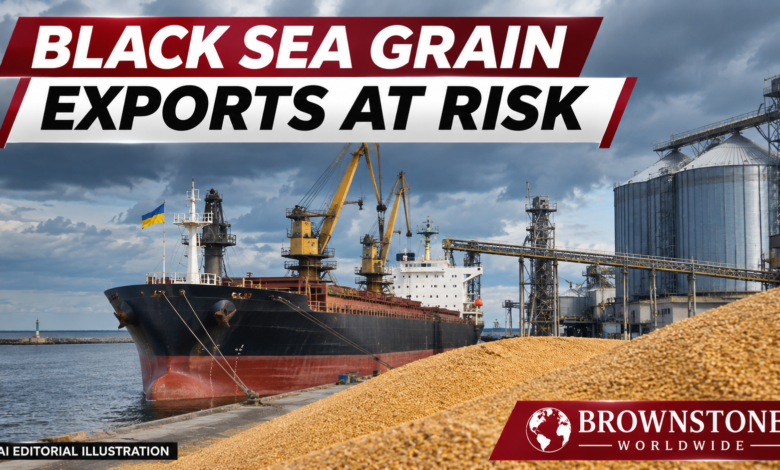
Featured image: Brownstone Worldwide original AI-generated editorial illustration; not documentary photography.
Know. Grow. Belong. — Brownstone Worldwide