

Chinese AI Firms Rush to Rent Restricted Nvidia Computing Power Overseas as U.S. Weighs Closing Cloud Loophole
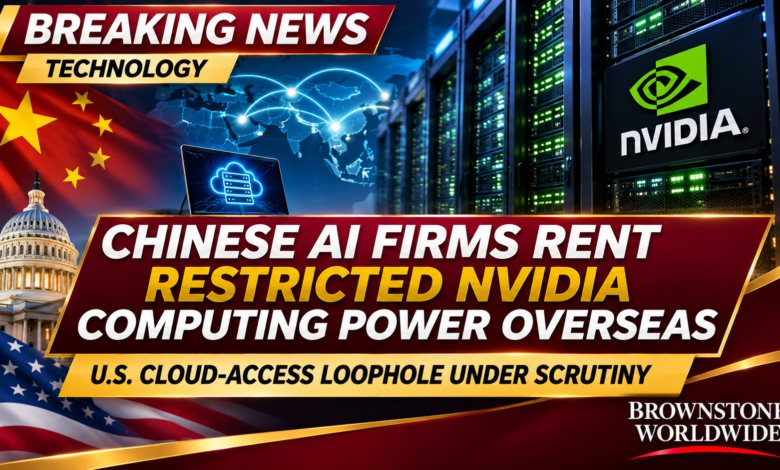
BEIJING / WASHINGTON — November 12, 2026. Chinese artificial intelligence companies are moving to reserve computing capacity powered by advanced Nvidia chips at data centers outside China, according to a new Reuters investigation. The activity exposes a major gap in U.S. export controls: Washington restricts direct shipments of its most advanced AI processors to China, but Chinese customers can still rent access to some of those chips through overseas cloud providers.
How the loophole works
The chips do not need to enter China. Instead, a company can send computing workloads across the internet to servers operating in another country, then receive the results remotely. This distinction between physically exporting a restricted chip and remotely using one is at the center of the regulatory dispute. Remote access is not, by itself, proof of unlawful conduct; legal obligations depend on the specific entities, services and applicable rules.
Chinese firms seek overseas capacity
Reuters reported that a major Chinese cloud provider has discussed securing foreign Nvidia capacity and that other companies have contacted data-center operators. Smaller AI laboratories have explored arrangements with providers in Southeast Asia. The people who described the discussions were not publicly identified, and Reuters did not establish that all contemplated reservations had become completed contracts.
Congress considers new restrictions
The Remote Access Security Act would give the U.S. Commerce Department authority to regulate cloud-based access to restricted technology. The House passed the measure in January 2026 by a 369–22 vote; it was awaiting Senate action as of November 12. Even if enacted, implementing regulations would still be important in determining how remote access is restricted.
Why the issue matters for national security
Advanced graphics processors are central to training and running large AI models. U.S. policymakers argue that limiting access to the most powerful chips can help protect military and technological advantages. But critics of the existing approach say an export rule aimed mainly at hardware shipments can be less effective when processing power is available as a service across borders.
The controversy also has consequences for data-center operators, cloud companies, semiconductor manufacturers and investors. Restrictions on remote use could change where AI infrastructure is built, which customers can access it and how much computing power costs.
What is known — and what remains uncertain
The Reuters reporting documents a push by Chinese AI firms to secure overseas computing access. It does not establish that every overseas arrangement violates U.S. law, that every provider knowingly assists evasion, or that Congress has already closed the gap. Washington has previously addressed related export-control vulnerabilities, including guidance concerning overseas subsidiaries, but the remote-computing question remains under debate.
Brownstone Worldwide: What’s at stake?
For the United States, the question is whether restrictions on the physical sale of AI chips can meaningfully control access to the computing power they provide. For China, the question is how long companies can rely on overseas capacity to develop competitive AI systems. For the global technology sector, the answer could reshape cloud computing, investment and international trade.
Brownstone Worldwide will continue tracking the Remote Access Security Act, Commerce Department action and the implications for Nvidia and global AI competition.
Brownstone Worldwide — Changing the narrative of how we tell our stories OUR way.
Sources: Reuters, November 12, 2026; Quartz, November 12, 2026; Reuters reporting on Commerce Department guidance, May 2026.
Featured graphic is an editorial illustration, not a documentary photograph.