
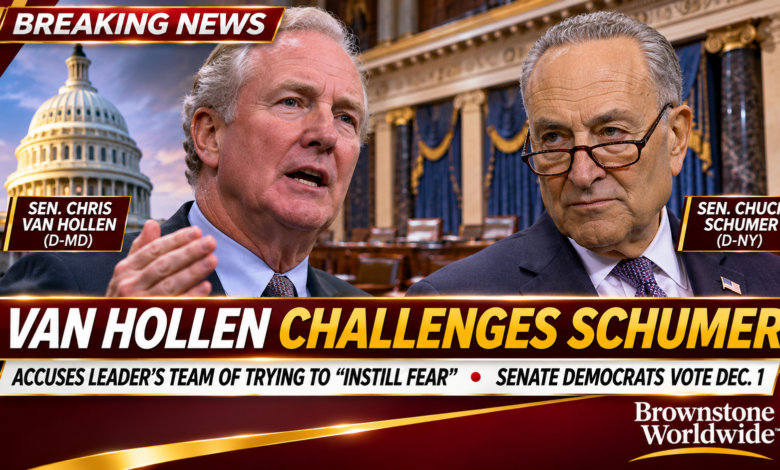
WASHINGTON — November 16, 2026. Maryland Democratic Sen. Chris Van Hollen is escalating his campaign to replace Chuck Schumer as the leader of the incoming Democratic Senate majority, accusing Schumer’s allies of trying to intimidate colleagues and presenting misleading vote counts. Schumer says he already has enough support to remain leader, setting up an unusually public internal contest after Democrats’ midterm election victories.
Van Hollen alleges effort to “instill fear”
In a Sunday interview on ABC News’ This Week, Van Hollen accused Schumer’s team of distributing misinformation about the leadership race. He said the strategy was designed to “instill fear” in senators who might support him and called for greater democracy within the caucus.
Van Hollen argued that the party must demonstrate change rather than return to business as usual. He said voters rejected President Donald Trump’s policies but had not yet given Democrats an unconditional endorsement.
Both candidates claim a path to victory
Van Hollen formally announced his candidacy on Thursday, November 12. He has acknowledged being an underdog but said on Sunday that he had approximately 15 supporters and growing. He disputes reports of a list of senators supposedly committed to Schumer, alleging some names on it actually support his challenge. Those private commitments cannot be independently verified ahead of a secret-ballot election.
Schumer, who has led Senate Democrats since 2017, responded that he welcomes debate about the caucus’s future but maintains he has the votes to continue. Several prominent senators have publicly backed Schumer, while progressive lawmakers and a number of newly elected Democrats are pushing for a change in leadership.
Why the December 1 vote matters
Senate Democrats are expected to hold a closed-door, secret-ballot leadership election on December 1. The winner would lead the Democratic majority when the new Congress convenes in January. The vote is among senators and senators-elect who will caucus with Democrats; it is not a national public election.
Van Hollen says the new majority should focus on working-class economic concerns, confronting political corruption and holding the Trump administration accountable. He has also criticized the role of major political donors and outside organizations in Democratic primary contests.
Different visions for the incoming majority
Schumer’s allies point to his recruitment and fundraising work during the midterms and argue that continuity would help the party turn electoral success into legislation. Van Hollen and his supporters argue that Democratic victories reflect a demand for a different approach and a more inclusive caucus.
Neither candidate has won the leadership election. The outcome remains uncertain because senators vote privately and public endorsement counts may not match the final ballot.
What comes next
Brownstone Worldwide will monitor new endorsements, any effort to change the leadership-election schedule and the December 1 vote itself. The result will help determine how Democrats exercise Senate power, negotiate with the White House and set their agenda in the next Congress.
Sources: ABC News, November 15, 2026; The Guardian, November 15; The Washington Post, November 12; CBS News, November 12; Axios, November 12–13.
Featured image is a Brownstone Worldwide editorial composite, not a photograph of the two senators together.