China to restrict silver exports, echoing rare earths playbook
China Tightens Controls on Silver Exports, Prompting Concerns from Global Industry
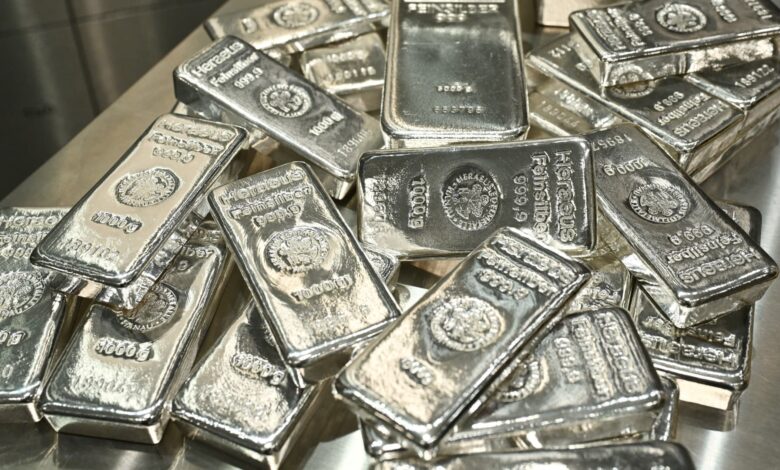
In a move that is set to impact the global industry, China is tightening controls on silver exports starting Thursday. This expansion of restrictions on silver, a once-ordinary metal critical to the U.S. industry and defense supply chains, has raised concerns among key industry players and experts.
Tesla CEO Elon Musk was quick to criticize the move, expressing his disapproval on his social media platform X. Musk highlighted the importance of silver in many industrial processes and voiced his concerns about the potential impact of the new restrictions.
The new measures were first announced by China’s Commerce Ministry in October to strengthen oversight of rare metals, coinciding with a meeting between U.S. President Donald Trump and Chinese President Xi Jinping. While China has not explicitly announced a blanket ban on silver exports, the state-run Securities Times cited an unnamed industry insider who stated that the metal has now been elevated to a strategic material, subjecting its export controls to the same regulatory scrutiny as rare earth metals.
The EU Chamber of Commerce in China conducted a survey of its members in November, revealing that a majority of respondents have either been or expect to be affected by these export controls. The U.S. added silver to its list of critical minerals in November, recognizing its significance in various industries such as electronics, renewable energy, and healthcare.
China, one of the world’s largest producers of silver, exported more than 4,600 tons of the metal in the first 11 months of the year. The new restrictions on silver exports come at a time when interest in the metal is on the rise, with Chinese and Indian companies offering to buy physical silver at prices significantly higher than the market rate.
The surge in silver prices, along with the weakening of the U.S. dollar, has raised concerns about the state of the economy. As silver prices continue to climb, investors are increasingly turning to precious metals as a hedge against inflation and economic uncertainty.
Overall, the tightening of controls on silver exports by China has significant implications for the global industry and could potentially disrupt supply chains and market dynamics. The move has sparked a debate about the role of silver in the global economy and the need for greater transparency and oversight in the precious metals market. Silver prices hit a record high above $80 an ounce earlier this week before retreating slightly to around $73. This pullback comes after a strong rally in silver prices over the past few months, driven by factors such as increased industrial demand and concerns about inflation.
Gold, often seen as a safe haven asset, has also seen significant gains this year, rising by more than 60%. This marks the precious metal’s best performance since 1979, as investors seek refuge from market volatility and economic uncertainty.
Bitcoin, a digital currency often compared to gold as a store of value, has not fared as well in comparison. The cryptocurrency was trading near $88,000 on Wednesday morning, down by more than 5% for the year. Despite its volatility, some investors view Bitcoin as a hedge against traditional financial systems and a way to diversify their portfolios.
Overall, the precious metals market remains strong, with both silver and gold attracting investor interest as geopolitical tensions and economic uncertainties persist. As global markets continue to navigate through uncertain times, precious metals are likely to remain a popular choice for investors looking to protect their wealth and hedge against inflation.
In conclusion, while silver prices have retreated from their recent peak, the overall outlook for precious metals remains positive. Investors are closely monitoring market developments and adjusting their portfolios accordingly to navigate through the current economic landscape.