Data Centers Are Turning to Gas Generators for Prime Power to Eliminate Long Lead Times for Grid Connections
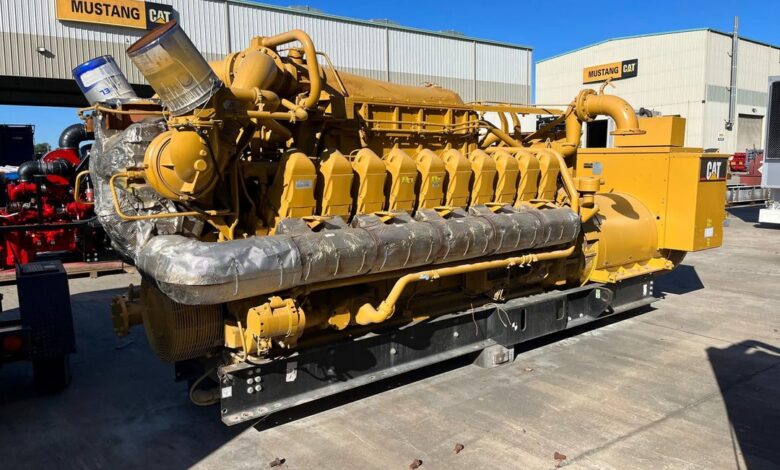
Backup generators are becoming increasingly vital in data centers across North America. Traditionally, these generators were only used as a fallback when other power sources failed. However, due to the ongoing shortage of available power, their importance has grown significantly. Data center developers are now turning to natural gas generators to provide power more quickly, especially for high-reliability and always-on power for artificial intelligence workloads.
One such example is the massive data center campus being developed in Millard County, Utah. This project, a collaboration between Joule Capital Partners, Caterpillar, and CAT dealer Wheeler Machinery, aims to eventually add up to 4 GW of power. At the core of this campus will be a fleet of Caterpillar G3520K generator sets, running on natural gas and designed for prime power. Each generator set has an engine speed of 1,500 RPM and a power output of 2.5 MW. These generators not only produce electricity but also capture waste heat to power and cool high-density AI servers.
Melissa Busen, senior vice president of Electric Power at Caterpillar, highlighted the speed-to-power advantage of these natural gas generators. She emphasized the critical need for rapid power delivery to meet the increasing demand for compute capacity.
The trend of massive data center complexes is on the rise, driven by the need to support artificial intelligence. Colocation providers and hyperscalers added 12 GW of new capacity in 2024, with 35 GW-scale projects announced compared to just three the previous year. These projects are popping up in locations like North Dakota, West Texas, Indiana, and Alberta, Canada, where innovative solutions like underutilized wind farms and onsite natural gas generation are being utilized to power these data centers.
The gas engine sector has been experiencing healthy growth, with the global gas generator market valued at $6.9 billion in 2024. Analysts project an annual growth rate of 8.8%, reaching $16 billion by 2034. The demand for generators, especially those beyond 330 kVA, is driving growth for companies like Fidelity Manufacturing in Ocala, Florida. Fidelity specializes in manufacturing custom steel fuel tank sub-bases, aluminum tube frame enclosures, and other components for generator packages used by engine manufacturers like Caterpillar and Cummins.
Mitch Twardosky, CEO of Fidelity Manufacturing, highlighted the company’s rapid expansion to meet the growing demand for generator packages in data centers. He emphasized the importance of acoustical performance, reliability, and longevity in choosing a gas generator package. Twardosky recommended aluminum tube frame enclosures over traditional steel structures for their strength, rigidity, and corrosion resistance. These designs are also lighter, aiding in transport logistics and onsite installation.
Lead times for larger generator packages for data centers can be up to a year or more. Twardosky emphasized the importance of compliance with structural engineering requirements and building codes, considering factors like hurricane, earthquake, and weather protection. Generator packages may include features such as load banks, circuit breakers, power distribution panels, and ventilation fans. Fidelity provides onsite installation services for its enclosure packages and packages from other vendors, ensuring a seamless and compliant installation process. Stairs, platforms, and walkways are essential components for accessing an enclosure package within a data center. It is crucial that these access points are not treated as an afterthought but are carefully planned and built in compliance with Occupational Safety and Health Administration (OSHA) and International Building Code (IBC) standards. These structures should be constructed using an aluminum tube frame decked with molded fiberglass grating in a high-visibility yellow color for safety.
According to industry experts, such as Twardosky, data center managers should prioritize the installation of strong, anti-slip surfaces that are resistant to chemicals, including fuels and petroleum products. This ensures the safety of personnel who need to access the enclosure package for maintenance or other purposes.
In the past, diesel generators have been the go-to choice for backup power in data centers. However, there is a shift towards natural gas as the preferred fuel source for generators. This transition opens up the possibility for generators to serve as prime power sources rather than just backups. Some utilities are informing data center developers that it may take several years before additional power capacity is available. In such cases, natural gas generators can provide a more immediate solution by supplying power to the entire data center initially and then transitioning to backup duty once other power sources become accessible.
Overall, it is essential for data center operators to stay informed about the latest developments in backup power solutions and access infrastructure. By investing in high-quality stairs, platforms, and walkways, as well as considering alternative fuel sources for generators, data centers can ensure reliable and efficient operations in the face of power challenges.
Drew Robb, a seasoned freelance writer specializing in engineering and technology, emphasizes the importance of staying ahead of industry trends to make informed decisions that benefit data center operations.