From $1 trillion spending to F-35s, U.S.-Saudi pledges aren’t done deals yet
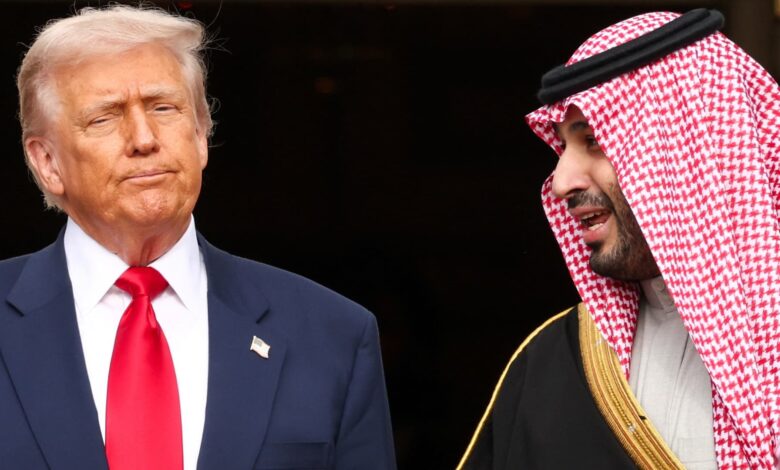
The recent visit of Saudi Arabia’s Crown Prince Mohammed bin Salman to the United States has sparked a flurry of activity and speculation regarding potential investments and defense deals between the two countries. U.S. President Donald Trump welcomed the Saudi leader with open arms, emphasizing the kingdom’s pledge to invest $1 trillion in the United States and the possible sale of American fighter jets to Riyadh.
The $1 trillion investment pledge by Saudi Arabia raised eyebrows among experts, who questioned the feasibility and timeline of such a massive commitment. While the White House hailed the increased investment as a sign of deepening trust and momentum under President Trump’s leadership, economists cautioned that fulfilling such a pledge might not be feasible in the near future, given that it equates to almost the entire GDP of the kingdom for a year.
In addition to the investment discussions, Trump and MBS also explored the potential sale of F-35 fighter jets to Saudi Arabia, with the kingdom reportedly interested in acquiring up to 48 of these advanced stealth aircraft. The proposed deal, worth billions of dollars, has raised concerns among U.S. lawmakers and Israel, the U.S.’ primary ally in the Middle East, which currently holds the exclusive rights to F-35s in the region.
Despite objections from Israel, Trump expressed his support for the sale of F-35s to Saudi Arabia, emphasizing the strong alliances with both countries. However, analysts warned that providing Saudi Arabia with F-35s before it normalizes relations with Israel, as outlined in the Abraham Accords, could be viewed as an excessive reward for Riyadh.
The road to finalizing these deals is expected to be long and arduous, with potential obstacles related to regional dynamics, security concerns, and diplomatic relations. As discussions continue between the U.S. and Saudi Arabia, both parties will need to navigate complex issues and address lingering doubts to ensure the successful implementation of these agreements. As discussions continue surrounding the potential transfer of technology between the United States, Israel, and Saudi Arabia, it is becoming increasingly clear that Congress will play a significant role in the decision-making process. With a historically strong relationship with Israel, Congress is likely to scrutinize any agreements that involve the sharing of technology with Saudi Arabia.
While the deal is still in its early stages, it is evident that there are complexities that need to be addressed. As Professor John Doe pointed out, the details of who will transfer what technology and when are crucial aspects that will need to be carefully negotiated. Given Congress’s favorable stance towards Israel, it is expected that they will closely monitor the terms of any agreements involving technology transfers to Saudi Arabia.
Although the deal is not necessarily in jeopardy, it is clear that there will be obstacles to overcome before it can come to fruition. Both Israel and Saudi Arabia have faced challenges in terms of public perception, which could impact the progress of the agreement. As Professor Doe mentioned, there is likely to be a long road ahead before any deals are finalized.
In the meantime, discussions will continue as all parties work towards finding common ground and addressing any concerns that arise. It is essential that all stakeholders are involved in the decision-making process to ensure that any technology transfers are carried out responsibly and in the best interests of all parties involved.
As the situation unfolds, it will be important to keep a close eye on developments and any decisions made by Congress in relation to the transfer of technology between the United States, Israel, and Saudi Arabia. With so much at stake, it is crucial that all aspects of the deal are carefully considered to ensure a successful outcome for everyone involved.