Homebuilders bet on 1% mortgage rates to wake up US buyers – JS
Unlocking Unprecedented Mortgage Deals in the Current Housing Market
By Prashant Gopal, Bloomberg News
As the average mortgage rate hovers near 6%, U.S. homebuyers are presented with an enticing opportunity – the most affordable monthly payments in a year. However, San Antonio real estate agent Tavyn Weyman has a secret to drive these costs even lower – significantly lower.
The strategy is straightforward: opt for new construction.
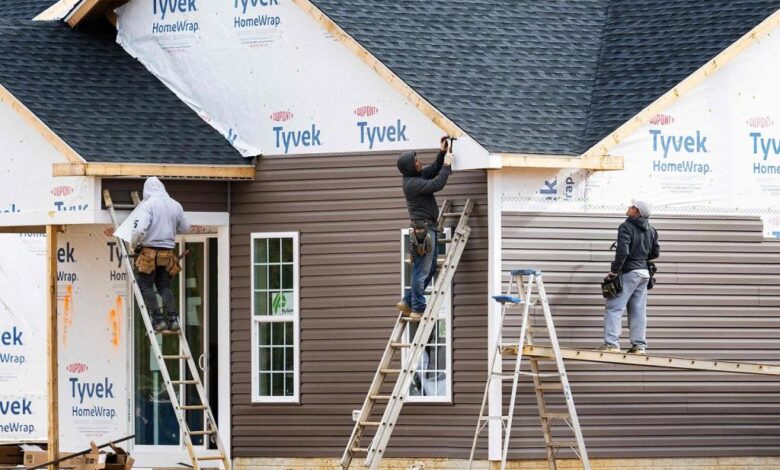
Builders nationwide with unsold inventory are going above and beyond to entice buyers by subsidizing mortgage rates to levels that rival the record lows seen during the Covid-19 pandemic. Additionally, buyers can benefit from incentives such as free appliances, finished basements, and zero closing costs.
Weyman recently helped a client secure a 3.49% fixed rate on a $414,000 new home on the west side of town, courtesy of a major private builder. The builder even increased Weyman’s commission to cover the cost of breaking the buyer’s lease and threw in an extra $2,000 to cover the first month’s expenses.
“You want a 4-bedroom home with a 2% rate and a $2,000 monthly payment? I can make that happen – as unbelievable as it may sound,” Weyman stated. “Everything is negotiable.”
One single mother relocating from Florida is eyeing a 3.99% fixed rate deal from D.R. Horton Inc., the largest U.S. builder by stock market value. However, it’s the introductory rate of less than 1% for the first year that has captured her interest, according to Weyman.
These offerings are not indicative of a robust housing market but rather reflect the measures taken by the industry to attract buyers amidst challenges such as tariffs, a government shutdown, and concerns about job stability.
Year-to-date job cuts have surpassed 1 million, marking the highest level since the pandemic, according to outplacement firm Challenger, Gray & Christmas. In October alone, companies announced 153,000 job cuts, the most for any October since 2003.
This climate of uncertainty has dampened the anticipated surge in homebuyer demand despite the decline in mortgage rates.
“We would have expected to see a little bigger bump out of the reduction in mortgage rates that we’ve seen,” remarked D.R. Horton Chief Executive Officer Paul Romanowski during an analyst call last month. “It truly is choppy.”
Other builders have also reported lukewarm feedback from the market. Century Communities Inc. noted weak demand from entry-level buyers during an earnings call, while PulteGroup Inc. revealed a 14% drop in first-time buyer orders in the latest quarter compared to the previous year.
“Lower interest rates are a positive for housing demand, but rates don’t operate in a vacuum,” explained Ryan Marshall, CEO of PulteGroup, during an earnings call last month. “There is a clear offset if rates are coming down because the economy is slowing and people are worried about their jobs.”
One major challenge faced by sales agents is the fact that renting has become more cost-effective than buying. Rental rates are showing signs of decline, with landlords reporting retention rates nearing record highs.
Meanwhile, the resale market is no longer experiencing a shortage of listings, providing buyers with ample alternatives. However, the response has been tepid, with pending sales in September barely surpassing record lows.
“The existing market poses a much stiffer competition to homebuilders than it has in a long time,” noted Mark Zandi, chief economist at Moody’s Analytics. “There’s a lot of angst about job security, given there is no hiring. And artificial intelligence is coming on.”
For the first time in July and August, the price of a typical new home was lower than that of an existing home, as per an analysis by John Burns Research & Consulting based on Census and National Association of Realtors data. The average premium since 1973 has been 16%, excluding incentives.
Production builders allocated an average of 7.5% of sales prices towards incentives in the three months ending August, up from 4.8% in May 2024, according to the company’s builder surveys.
“There is an opportunity to buy new homes at really low rates,” said Eric Finnigan, vice president at John Burns. “The big surprise is why sales are still so soft.”
However, not all rate buydowns are equal. While some offer a permanent reduction in borrowing costs for the entire 30-year term, others maintain low rates temporarily. These temporary deals can benefit households anticipating rising income or a future refinancing but pose a real risk to borrowers unprepared for the increase in monthly payments post-promotional period.
Lennar Corp. is currently running a nationwide “Inventory Close-Out Sale,” featuring rates as low as 3.75% in Denver and up to $70,000 in price reductions in Charleston, South Carolina. Lennar allocated 14% per home towards incentives as a share of revenue this year, up from 10% in 2024.
The strategy of undercutting the resale market appears to be effective, at least according to Weyman. The San Antonio agent revealed that seven out of eight homes he sold this year were new constructions.
“New homebuyers have high expectations, so you have to exceed them,” Weyman emphasized. “I always assure clients that they won’t have to cover closing costs, especially in today’s market.”
—With assistance from Julia Fanzeres.
(Updates with October job cuts in eighth paragraph.)
©2025 Bloomberg L.P. Visit bloomberg.com. Distributed by Tribune Content Agency, LLC.