How Italy’s banking M&A wave started crashing
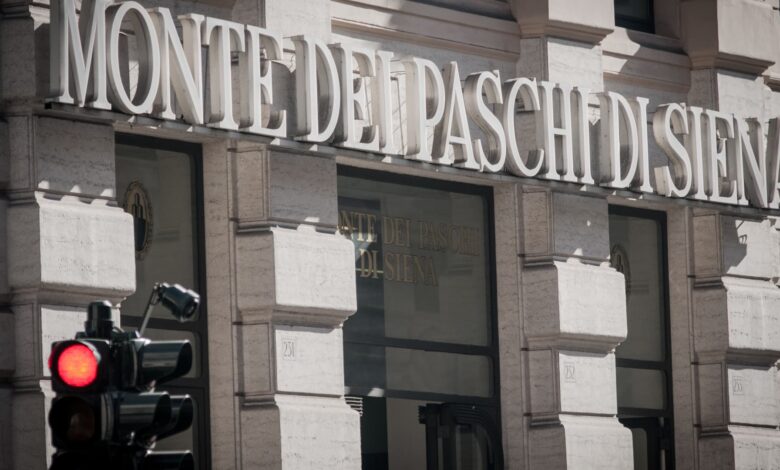
Italy’s banking sector has been a hotbed of activity in recent months, with major players making bold moves to consolidate and expand their reach. The drama started with UniCredit’s bid for Banco BPM, which was abruptly dropped due to concerns over government conditions. Meanwhile, Mediobanca’s failed bid for Banca Generali has left the door open for Monte dei Paschi’s interest in the lender.
As the dust settles, it is clear that consolidation is a key strategy for European banks looking to compete with their American counterparts. The improved performance of the sector, fueled by restructuring efforts and increased investment banking returns, has created a ripe environment for M&A activity. Italy, in particular, has seen a flurry of offers from its major banks, with Intesa Sanpaolo notably absent from the fray.
Despite the setbacks, Monte dei Paschi remains steadfast in its pursuit of Mediobanca. Analysts believe that the odds are now in favor of MPS securing a significant stake in the lender, signaling a potential shift in the Italian banking landscape. Other players, such as Credit Agricole, are also eyeing strategic moves in the market, with a possible merger with Banco BPM on the horizon.
Italy’s banks are not limiting their ambitions to domestic acquisitions. UniCredit’s stake in Commerzbank and Alpha Bank signals a broader strategy to expand beyond national borders. The European Central Bank’s approval of UniCredit’s stake in Commerzbank has sparked speculation of a potential takeover, despite resistance from the German and Berlin administrations.
The consolidation trend is not unique to Italy, as other European countries are also witnessing a wave of M&A activity. Spain’s Banco Santander’s acquisition of TSB and BBVA’s bid for Sabadell highlight the region’s appetite for strategic expansion. However, regulatory challenges from both the EU and national governments have complicated these transactions, underscoring the complexity of cross-border banking deals.
In conclusion, Italy’s banking sector is at a crossroads, with major players jockeying for position in a rapidly changing market. The outcome of these consolidation efforts will not only reshape the Italian banking landscape but also provide valuable lessons for the broader European banking sector as it navigates a new era of competition and collaboration. Italian Finance Minister Giancarlo Giorgetti has recently come under scrutiny for his defense of the stake exit and his threats to resign if his conditions for UniCredit were overruled. Giorgetti emphasized the “absolute correctness” of the stake exit decision and stood firm on the conditions imposed on UniCredit, including a timeline for the lender to cease its activities in Russia and a request to maintain Banco BPM’s loan-to-deposit ratio for five years.
The Italian Finance Ministry’s intervention played a significant role in thwarting UniCredit’s third takeover attempt at Banco BPM, according to experts in the field. Alloatti, a financial analyst, stated that Rome’s involvement was decisive in the outcome of the bid. Additionally, Caselli from the SDA Bocconi School of Management noted that Rome’s actions in the MPS bid were merely that of a shareholder.
The European Union has been advocating for lender consolidation through the banking union supervision framework. However, Claudia Buch, chair of the supervisory board of the ECB, highlighted that the full integration of banking markets in Europe has not been achieved. Cross-border mergers remain rare, with most banks heavily invested in their home markets. Despite a decrease in the number of EU banks since 2009, there are still thousands operating within the European Union, with Italy hosting a significant number of them.
European Banking Authority Chairman Jose Manuel Campa expressed frustration over the lack of significant cross-border mergers within the EU. He emphasized the importance of moving towards single-market mergers rather than domestic mergers driven by local interests.
In conclusion, Giorgetti’s defense of the stake exit and his stance on UniCredit’s conditions reflect the complex dynamics of the European banking sector. The EU’s push for consolidation and integration highlights the need for greater cross-border cooperation and mergers to strengthen the banking market within the bloc.