Iran War: 10 States Where Gas Is Spiking the Highest Now
Amid escalating tensions between Iran, the U.S., and Israel, global oil prices are on the rise, leading to a surge in gasoline costs worldwide.
In the United States, gas prices have seen a significant increase ranging from 1% to 14% over the past week, varying by state, as noted by Denton Cinquegrana, the chief oil analyst at the Oil Price Information Service.
It’s only a matter of time before drivers across the country feel the impact.
“This is a general trend affecting all regions,” Cinquegrana explains when asked about potential disparities in gas price hikes among different states. “California is always a state to watch out for in terms of disproportionate price increases, but currently, it seems to be affecting all states.”
Curious about pet insurance costs? Find out how much you could be spending on vet bills.
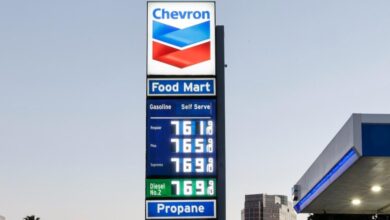
California stands out as the state with the highest gas prices in the nation, with an average of $4.74 per gallon for regular gas, reflecting a 10.2 cents increase in the last week according to data from AAA.
Comparatively, the national average for gas prices across all states is $3.20 per gallon, up from $2.98 a week ago, marking a 22.3-cent surge.
The Top 10 States with the Highest Gas Prices Currently
Here are the top 10 states where motorists are paying the most for gas, along with the week-over-week price increases per gallon, based on AAA data:
- California: $4.74 per gallon (+10.2 cents)
- Hawaii: $4.42 (+1.2 cents)
- Washington: $4.41 (+5 cents)
- Oregon: $3.99 (+6.7 cents)
- Nevada: $3.83 (+1.3 cents)
- Alaska: $3.67 (+8.7 cents)
- Arizona: $3.49 (+22.1 cents)
- Illinois: $3.32 (+28.7 cents)
- Pennsylvania: $3.30 (+17 cents)
- Michigan: $3.24 (+24.1 cents)
Considering canceling unused subscriptions? Discover what you could potentially remove from your expenses.
Anticipated Gas Price Hikes Due to the Iran Conflict
For American drivers, the sudden surge in gas prices may trigger memories of 2022 when Russia’s invasion of Ukraine led to record-high gas prices. While a similar spike resulting from the Iran conflict is not guaranteed, predicting geopolitical events and their impact on oil prices remains challenging.
President Donald Trump recently announced on Truth Social that the U.S. Navy would be prepared to escort tankers through the Strait of Hormuz if necessary. This strategic waterway connects the Persian Gulf and the Gulf of Oman, facilitating the passage of approximately 20% of the world’s oil supply.
With significant disruptions in the strait’s traffic flow, as reported by the Wall Street Journal, over 3,000 vessels are currently idling in the Persian Gulf awaiting clearance for transit.
As the conflict expands to target oil-producing nations like the United Arab Emirates, Iraq, Qatar, and Kuwait, oil prices have surged to over $81 per barrel for Brent crude, representing a $10 increase within a week.
Crude oil constitutes approximately 47% of the total gasoline cost for U.S. drivers. Typically, a $10 fluctuation in oil prices leads to a 25-cent adjustment in gas prices.
If the conflict persists or if Iran enforces a significant blockade in the strait, Americans could face considerable challenges at the gas pump, experts caution. Even before recent events, gas prices were projected to rise in spring due to seasonal factors such as increased demand and the switch to summer-blend gasoline. Thus, securing a decent gas price this week might be wise for motorists.
Looking to enhance your investment portfolio? Explore expert-curated stock recommendations for confident investing.
More Money Insights:
Best Credit Cards of 2026
Surging Gold and Oil Prices Amid Iran Conflict – Gas Costs Could Follow Suit
Effective Strategies for Saving Money on Gasoline