Jamie Dimon says ‘watch out’ as lofty asset prices add to economic risks: ‘My anxiety is high’
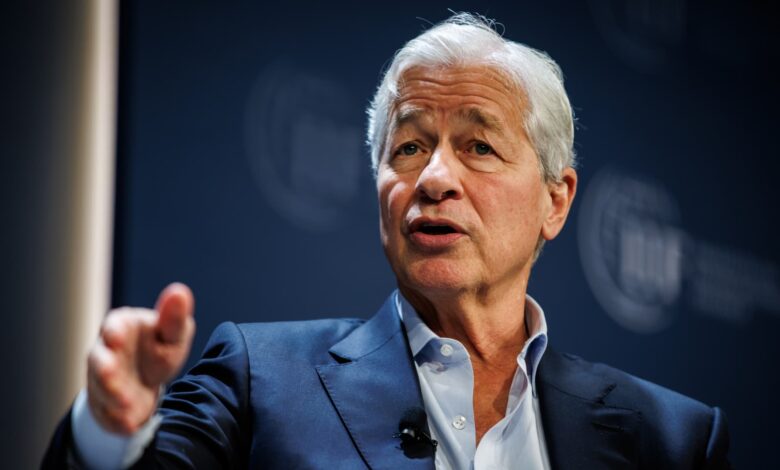
Jamie Dimon, the chief executive officer of JPMorgan Chase & Co., expressed his concerns about the U.S. economy during the 2025 IIF annual membership meeting in Washington. Dimon highlighted elevated asset prices and a competitive banking environment that reminded him of the pre-2008 crisis years. Despite economists praising the Trump administration’s tax and deregulatory policies for boosting economic growth, Dimon’s cautious approach led him to consider potential risks when expectations are high.
Dimon emphasized the inevitability of the economic cycle turning, resulting in a wave of borrower defaults that could impact lenders across various industries unexpectedly. His anxiety was palpable as he expressed his worries about the high asset prices and the added risk they pose to the economy. While the broader S&P 500 index remains near its all-time high, recent concerns about loans to software companies and the impact of AI disruptions have rattled the markets.
The recent turmoil in private credit lending, triggered by Blue Owl’s asset sell-off to meet investor demands, raised questions about the start of a broader downturn in credit. This episode not only affected smaller firms but also major alternative asset managers like Apollo, KKR, and Blackstone. Market observers speculated on the implications of this event and its potential ripple effects on the credit market.
Dimon also highlighted the unpredictability of credit cycles, pointing out that the surprise often lies in which industry is most affected. He echoed his deputies’ sentiments on private credit, suggesting that the issues might not be limited to a few lenders but could have broader implications. The CEO cautioned against complacency in the current environment, drawing parallels to the pre-2008 financial crisis period when excessive leverage and risk-taking were prevalent.
Addressing concerns about CEO succession at JPMorgan, Dimon refrained from providing a specific timeline for his tenure. While he acknowledged his role as CEO for a few more years, he hinted at a possible transition to an executive chairman position in the future. As the architect of JPMorgan’s success over the years, Dimon’s leadership and strategic vision have been instrumental in shaping the bank into a global financial powerhouse.
In conclusion, Dimon’s apprehensions about the economy and the potential risks ahead serve as a reminder of the cyclical nature of markets and the importance of prudent risk management. As investors navigate through uncertain times, staying vigilant and prepared for unforeseen challenges will be crucial in safeguarding financial stability and long-term growth.