Jeep maker Stellantis disappoints investors as charges, supply risks cloud outlook
MILAN (Reuters) – Stellantis Warns of Charges Due to Regulation Changes and Strategy Shifts
By Giulio Piovaccari and Gilles Guillaume
Automaker Stellantis issued a cautionary statement on Thursday regarding impending charges related to regulatory changes, strategic shifts, and product plans. This announcement raised concerns among investors about the company’s future prospects, leading to a decline of up to 6.5% in Stellantis’ shares.
The Franco-Italian automotive company reported a 13% increase in third-quarter revenue, marking its first revenue growth in seven quarters. Stellantis also reiterated its forecasts for higher revenue, improved cash flow, and low-single digit margins in the second half of the year.
However, the company disclosed that it anticipates one-off charges in the coming months stemming from alterations to its strategic and product plans. These changes include a shift back to hybrid vehicles after an initial emphasis on electrification, as well as warranty extensions for faulty products such as certain engine models.
Concerns Over Unclear Guidance Impact Shares
“We are also taking decisive actions to align Stellantis’ resources, programs, and plans to support long-term, profitable growth, including our recently announced $13 billion investment in the U.S.,” stated the new CEO, Antonio Filosa.
Analysts at Jefferies expressed unease about the forthcoming charges, labeling the guidance provided by Stellantis as “vague.” Citi analysts also cautioned that the size and effect of these charges on free cash flows remain ambiguous.
Following the announcement, shares of Stellantis listed on the Milan stock exchange dropped by 5% by 1010 GMT, making the company one of the top decliners on the pan-European STOXX 600 index.
A company spokesperson clarified to Reuters that these additional charges were already factored into Stellantis’ second-half guidance. The statement also mentioned that the guidance assumes no disruptions or shortages in the current supply chains.
The global automotive industry is currently grappling with a severe semiconductor supply shortage originating from trade tensions between the U.S. and China, particularly affecting Dutch company Nexperia.
Stellantis Sales Strategy and Challenges
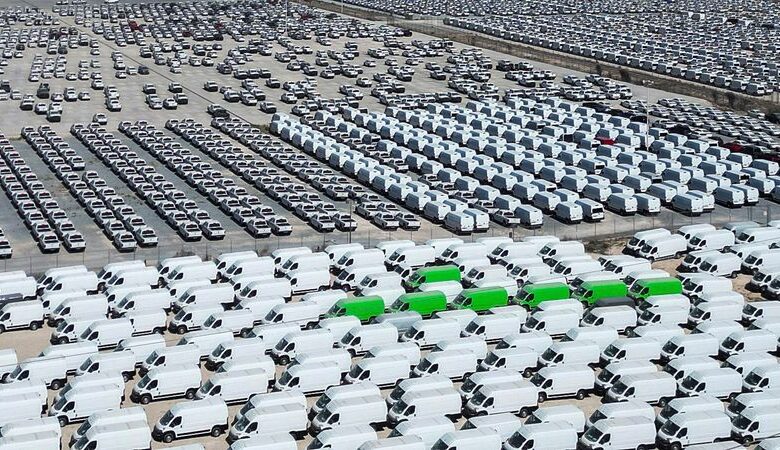
Antonio Filosa, who assumed the role of CEO in June, is leading a turnaround effort in the U.S. market, where Stellantis has been facing decreasing sales and excess inventory, factors that contributed to the exit of former CEO Carlos Tavares.
Earlier this month, the company announced a $13 billion investment to bolster U.S. production and offset tariffs imposed by the Trump administration.
Stellantis also estimated a 1 billion euro ($1.2 billion) impact from current U.S. trade policies by 2025, aligning with the lower end of its previous projections.
Filosa has implemented several strategic moves, including recording significant pre-tax charges in the first half of the year, reintroducing popular models like the Jeep Cherokee SUV, and refocusing the company’s efforts on hybrid and petrol vehicles following a previous strong push towards electrification.