Living near toxic Superfund sites linked to aggressive breast cancer
Breast cancer is a significant health concern for women, with recent studies revealing eye-opening connections between the disease, Superfund sites, and social adversity. Researchers at the Sylvester Comprehensive Cancer Center, part of the University of Miami Miller School of Medicine, have delved into these links, shedding light on potential environmental factors influencing breast cancer trends.
According to the American Cancer Society, breast cancer is the second leading cause of cancer death among women. Recent studies have shown a rise in aggressive forms of breast cancer, such as triple-negative breast cancer, which are resistant to treatment. This has sparked interest in investigating environmental factors that may contribute to the increasing prevalence of these challenging cancer types.
In Florida, the presence of 52 active Superfund sites has raised concerns among the community and researchers alike. Superfund sites are areas designated by the government as contaminated with hazardous substances and in need of cleanup. Members of Sylvester’s Community Advisory Committee have highlighted the proximity of these sites to residential areas and their potential impact on health outcomes.
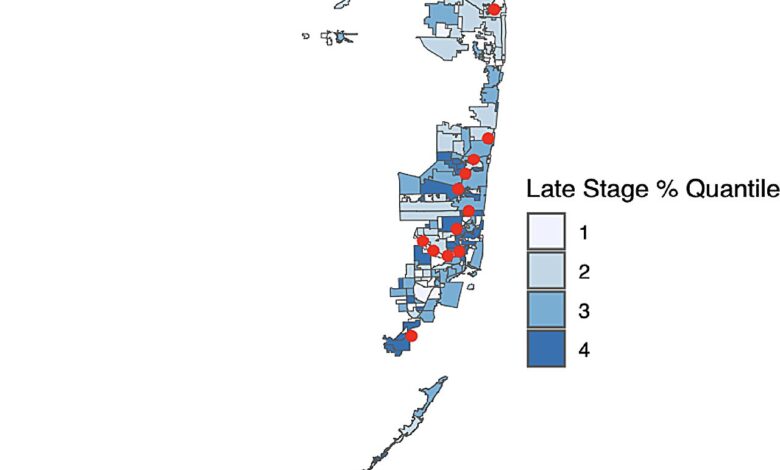
Dr. Erin Kobetz, an epidemiologist at Sylvester, spearheaded a multidisciplinary team to study the relationship between breast cancer and Superfund sites in Florida. Utilizing data from Sylvester’s SCAN360 portal, the team analyzed neighborhood characteristics and cancer risks in South Florida. The findings of their research have revealed compelling associations between living near Superfund sites and an increased risk of metastatic breast cancer.
One study, published in Scientific Reports, found that residing in the same census tract as a Superfund site raised the likelihood of metastasized breast cancer by approximately 30%. Another study focused on triple-negative breast cancer and reported that proximity to Superfund sites is linked to an elevated risk of this aggressive subtype. Moreover, exposure to pollutants like particulate matter 2.5 (PM2.5) was associated with a higher risk of triple-negative breast cancer in South Florida.
In a separate study led by Dr. Aristeidis Telonis, researchers analyzed breast cancer samples from patients in Miami to explore molecular biomarkers in tumors. By examining genetic, epigenetic, and RNA profiles, the team identified correlations between patients from neighborhoods with fewer health-promoting resources and more aggressive forms of breast cancer. The study, published in Cancer Epidemiology Biomarkers and Prevention, provides valuable insights into the molecular events driving cancer progression.
Dr. Kobetz emphasized that the research was driven by community concerns and the need to address environmental factors impacting health outcomes. The studies serve as a starting point for understanding the complex interplay between environmental exposures, social determinants, and cancer risks. Moving forward, personalized treatment approaches that consider both tumor characteristics and patient resources may lead to more effective cancer care strategies.
The findings of these studies underscore the importance of considering environmental factors in cancer research and healthcare practices. By bridging the gap between community concerns and scientific evidence, researchers at Sylvester Comprehensive Cancer Center are paving the way for a healthier future guided by community-driven research and data-informed interventions.