Retailers hire big, defying consumer warning signs

Retailers are experiencing a surge in hiring despite concerns about the economy, as consumers continue to spend. According to preliminary federal data released on Friday, the retail industry added nearly 22,000 jobs in April, accounting for almost one-fifth of total job growth. This brings the total number of employees in the retail industry to nearly 15.5 million, the highest since July 2024.
Despite ongoing challenges such as the war in Iran, higher gasoline prices, inflation, and President Trump’s tariff policy, consumers have remained resilient in their spending habits. This has given retailers the confidence to increase hiring to meet the demand for goods and services.
Cory Stahle, a senior economist at job search platform Indeed, noted that the strong consumer spending is a positive sign for both the retail industry and the broader economy. He stated, “This still shows how resilient spending has been, even amid a lot of the uncertainty. It’s an encouraging sign for the industry and for the economy more broadly.”
Warehouse clubs and supercenters were among the retailers driving sector hiring in April, according to the Bureau of Labor Statistics. However, department stores and sellers of electronics and appliances saw a decline in payrolls. The labor market also saw growth in courier and messenger jobs, with 38,000 positions added in April.
Retailers posted their highest volume of monthly job openings since 2023 in March, indicating a growing optimism about consumer spending. This surge in hiring reflects a shift from concerns in 2025 about Trump’s tariffs potentially impacting demand and creating cost pressures.
While consumer spending remains strong for now, there are warning signs on the horizon. Whirlpool and McDonald’s recently cited challenges in the U.S. market, with Whirlpool referring to a “recession-level industry decline” due to the Iran War impacting consumer confidence. The University of Michigan reported a record low consumer sentiment reading, with rising gas prices attributed to the war as a contributing factor.
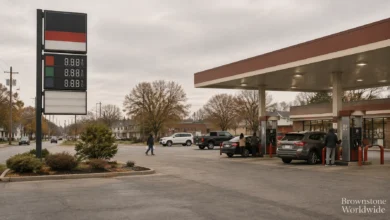
The price of gasoline reaching multi-year highs could prompt consumers to cut back on discretionary spending, potentially impacting the retail sector. Stahle warned that if demand decreases, retailers may need to reconsider their recent hiring spree.
Overall, while there is potential for growth in the retail sector, external factors like the Iran War and rising gas prices could pose challenges in the coming months. It will be important for retailers to monitor consumer sentiment and adjust their strategies accordingly to navigate these uncertainties.