South Korean Starbucks boss apologizes anew for ad campaign that evoked massacre

Seoul, South Korea — South Korean retail tycoon Chung Yong-jin has issued a second apology in response to the recent backlash faced by Starbucks’ local operation. The controversy arose from a marketing campaign that was widely perceived as mocking victims of a bloody military crackdown on pro-democracy protesters in 1980.
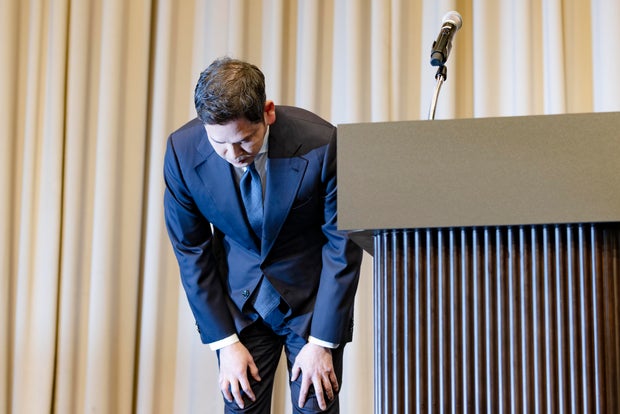
Chung, the chairman of Shinsegae Group, which holds a 67.5% stake in Starbucks Korea, made a televised statement where he bowed three times as he sought forgiveness from the families of democracy activists who were killed by the country’s former military dictatorship, as well as from the broader public.
The controversy stemmed from Starbucks’ attempt to promote a large tumbler as a “tank” on May 18, known as the anniversary of a democratic uprising in Gwangju that was violently suppressed by troops, tanks, and helicopters, resulting in numerous casualties. The campaign further fueled outrage by using the slogan “Thwack it on the table!,” which was interpreted as a reference to a 1987 police statement related to the torture death of student activist Park Jong-chol.
Following immediate public backlash, Shinsegae canceled the promotion, dismissed the CEO of Starbucks Korea, and initiated an investigation based on complaints from families of Gwangju victims. Chung expressed deep regret over the campaign’s impact on individuals and society.
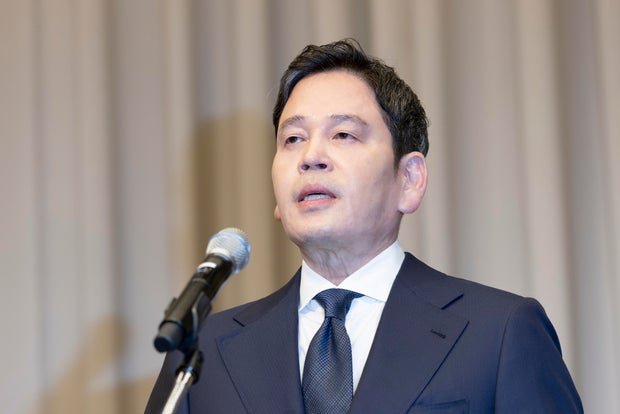
Chung urged the public not to target Starbucks staff for the incident, emphasizing that the responsibility lies with the management. Despite the controversy, there were no major incidents reported at Starbucks stores.
This marks Chung’s second apology, following his initial statement on May 19 where he acknowledged the pain caused to the victims and families of the May 18 Democratization Movement. Senior Shinsegae Group executive Jeon Sangjin stated that the company has not found conclusive evidence of intentional mockery by Starbucks Korea employees, but any employees found guilty of such behavior would face termination.
The campaign’s fallout has led to calls for boycotts, with government officials like Interior and Safety Minister Yoon Ho-jung announcing that Starbucks products will no longer be used at government events due to the chain’s “anti-historical behavior.”
A Shinsegae official revealed a significant drop in sales following the marketing controversy, while President Lee Jae Myung condemned the campaign as displaying “inhumane and disgraceful behavior.” The Gwangju crackdown in 1980 was part of General Chun Doo-hwan’s dictatorship, which led to nationwide protests in 1987 that paved the way for South Korea’s transition to democracy.