Supreme Court takes up legal battle over Trump tariffs, setting stage for major showdown
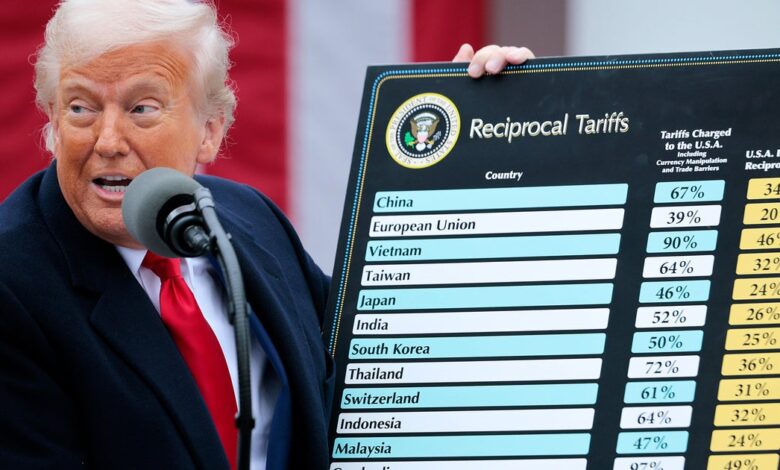
The Supreme Court is set to decide whether President Trump has the authority to impose sweeping tariffs, which will test one of the key elements of his economic agenda. The high court has agreed to review lower court decisions that questioned the president’s ability to issue global tariffs under an emergency powers law. The Justice Department appealed a ruling from a federal appeals court to the Supreme Court, emphasizing the importance of a swift resolution.
The case at hand revolves around the International Emergency Economic Powers Act, which President Trump invoked to impose tariffs. A federal trade court ruled that the president exceeded his authority under this law, a decision that was upheld by the U.S. Court of Appeals for the Federal Circuit. The appeals court determined that the tariffs imposed by Mr. Trump were illegal, highlighting the lack of clear limits on the president’s power to impose tariffs under IEEPA.
Another case before the Supreme Court involves two Illinois-based companies that sell educational toys and products. A federal district judge ruled that IEEPA does not authorize the president to impose the tariffs outlined in his executive orders. The companies have requested expedited review by the Supreme Court, expressing concern over the economic impact of the tariffs.
President Trump’s use of tariffs as a negotiating tool in trade agreements with various countries has been a focal point of his administration’s economic policies. The legal battle over the legality of these tariffs raises questions about the president’s authority to regulate trade under IEEPA.
The Supreme Court’s decision to hear these cases underscores the significance of the issue at hand. The outcome will not only impact the president’s ability to impose tariffs but also set a precedent for future challenges to executive actions. As the court prepares to hear arguments in November, the legal community and stakeholders await a ruling that could have far-reaching implications for U.S. trade policies.
In the midst of ongoing diplomatic negotiations and economic uncertainty, the Supreme Court’s intervention in this matter will provide much-needed clarity on the extent of the president’s authority in imposing tariffs. The outcome of these cases will shape the trajectory of U.S. trade relations and set the stage for future debates on executive powers in the realm of economic policy.