Trump Plan To Lower U.S. Drug Prices To Overseas Levels Lacks Details
President Trump’s Executive Order to Reduce Prescription Drug Costs: Challenges and Uncertainties
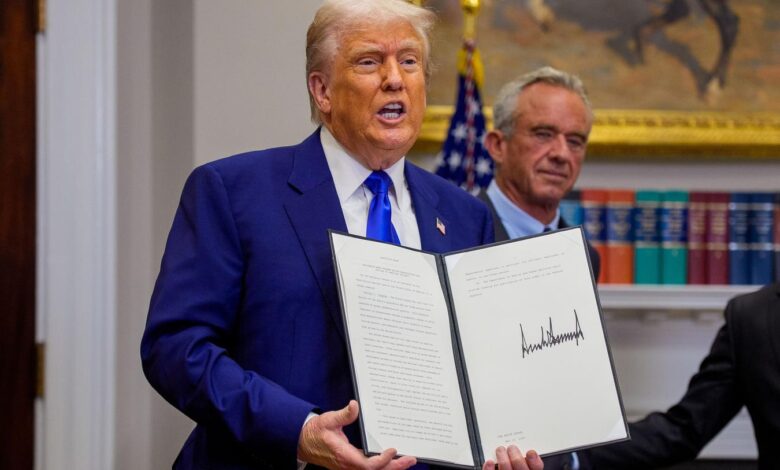
President Donald Trump made headlines in May when he announced an executive order aimed at lowering prescription drug prices in the United States by 30% to 80%. The plan, known as the “most favored nation” model, would tie U.S. drug prices to those of comparably wealthy nations. However, since the announcement, details on how this plan would be implemented have been scarce, leaving many stakeholders in the dark.
Pharmaceutical executives, who would be directly impacted by the order, have expressed concerns about the lack of clarity surrounding the implementation of the most favored nation model. Without specific details on how the prices would be determined and enforced, the feasibility of this plan remains uncertain.
The executive order calls for the selection of the lowest price among a set of economic peer countries with at least 60% of the U.S. gross domestic product per capita. While this provides a general framework for comparison, it fails to specify the actual price targets or how purchasing power differences between countries will be taken into account.
One of the key challenges facing pharmaceutical companies is the calculation of price differentials between nations, taking into consideration factors such as utilization disparities and differences in dosing and formulation. Additionally, the timing of drug approvals and launches varies across countries, making it difficult to create an international price index.
The executive order also mentions the establishment of a direct-to-consumer platform through which American patients can purchase drugs at the most favored nation price. However, the logistics of implementing such a platform, as well as the feasibility of drug companies selling directly to patients, remain unclear.
If drug manufacturers do not voluntarily reduce prices as per the most favored nation model, the administration plans to propose a rulemaking plan to enforce pricing regulations. One potential avenue for enforcement is through a demonstration project within the Medicare program, but past experiences with such projects have shown limited success in achieving cost savings.
The timeline for implementing the most favored nation model is also uncertain, with the Trump administration aiming for immediate results in contrast to the original five-year plan proposed by the previous administration. President Trump’s promise of significant price reductions in a short period raises questions about the feasibility and legality of such drastic changes.
In conclusion, while President Trump’s executive order to reduce prescription drug costs has sparked interest and speculation, the lack of details and the complexity of implementation pose significant challenges. Without clear guidelines on how the most favored nation model will be implemented and enforced, the future of this plan remains uncertain.