Trump urges Congress to enact 10% credit card interest rate cap
President Trump Calls for Congress to Cap Credit Card Rates at 10%
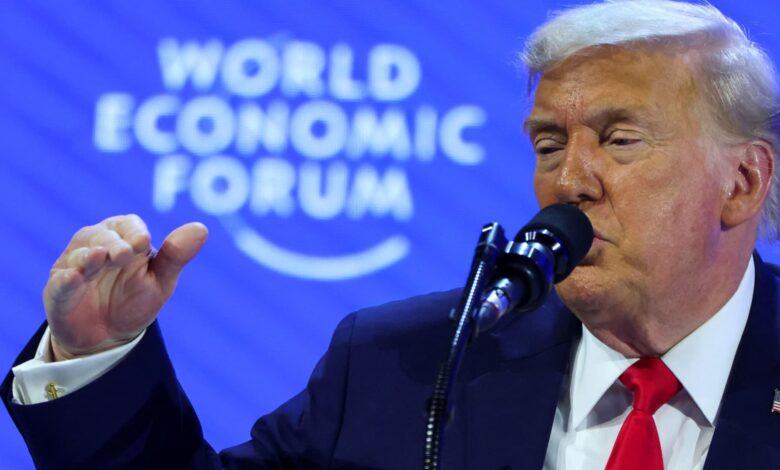
President Donald Trump made a bold move on Wednesday at the World Economic Forum in Davos, Switzerland, urging U.S. lawmakers to pass legislation capping credit card interest rates at 10% for one year. This comes after his recent social media post where he called on banks to voluntarily lower their rates.
During his speech, Trump expressed concern over the exorbitant interest rates charged by credit card companies, some as high as 30% or more. He questioned the ethics of such practices, asking, “Whatever happened to usury?”
Following Trump’s comments, bank stocks surged, with the KBW Bank Index rising 2.2% in morning trading. Capital One, a major player in the credit card industry, saw a 1.9% increase in its stock price.
While the Trump administration has various options to pressure banks to lower their rates, a legislative approach appears to be the most viable. Senators Josh Hawley and Bernie Sanders had previously introduced a bill to limit card APRs at 10% for five years, but the proposal has stalled in Congress.
Analysts, including Sanjay Sakhrani of KBW, are skeptical about the likelihood of a card bill garnering enough bipartisan support to become law. Many Republican lawmakers, including House Speaker Mike Johnson, have expressed reservations about imposing price controls on credit cards.
Despite the challenges, Trump’s influence within the GOP could potentially sway the outcome. However, the resistance from the financial industry, along with concerns about unintended consequences, may hinder the bill’s passage.
In response to Trump’s call for lower rates, some banks have expressed reluctance to comply, citing potential account cancellations for customers with lower credit scores. While the president warned of legal repercussions for non-compliance, bankers argue that they are already compliant with existing laws.
JPMorgan Chase CEO Jamie Dimon suggested a compromise, proposing a test of the rate cap in just two states, Vermont and Massachusetts, to gauge its impact. Dimon warned that implementing such a policy nationwide could lead to an “economic disaster” and significant disruptions in the credit card industry.
As the debate continues, the future of credit card interest rates remains uncertain. Trump’s push for a rate cap has ignited a contentious discussion within the financial sector and Congress, raising questions about the balance between consumer protection and industry profitability.