Washington DC residents protest White House on Trump federal agents deployment
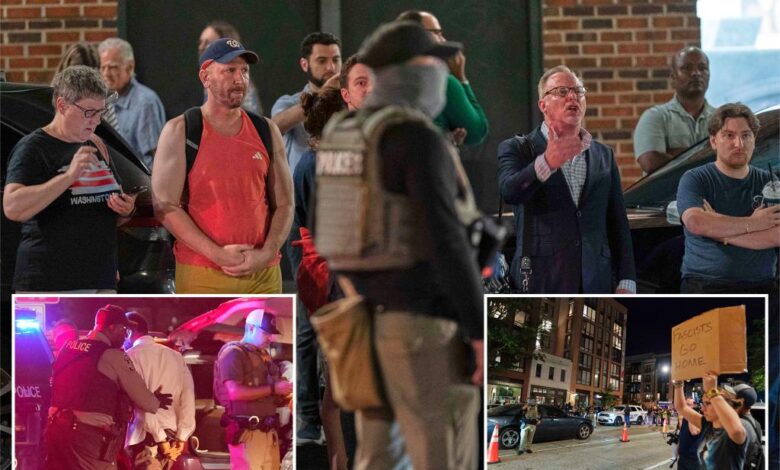
Residents in a Washington, DC neighborhood have taken to the streets to protest the increased police presence following the White House’s announcement that National Guard troops would be ramping up in the nation’s capital and federal officers would be on the streets around the clock. The protesters lined up along the 14th Street Northwest corridor, shouting “Go home, fascists” and “Get off our streets” at the law enforcement officers manning a vehicle checkpoint.
The escalation of action comes after President Donald Trump declared that his administration would take over the city’s police department for at least a month, citing emergency levels of crime that only federal intervention could address. However, city leaders pointed out that violent crime in Washington was at a 30-year low after a previous spike two years ago.
The city’s Democratic mayor, while initially calling the takeover an “authoritarian push,” later framed the influx of officers as a boost to public safety, although specific metrics for success were lacking. The Republican president insisted on the need for federal intervention, leading to the deployment of federal officers and National Guard troops across the city.
The increased presence of federal agents was visible in various high-profile locations, including the U Street corridor, the National Mall, the Navy Yard neighborhood, and Massachusetts Avenue. The joint efforts of federal law enforcement and city police resulted in 43 arrests in one night, with charges ranging from driving under the influence to assault with a deadly weapon.
Despite the administration’s claims of restoring law and order, some city officials and residents expressed skepticism about the necessity of federal intervention. DC Councilmember Christina Henderson dismissed the arrests as routine incidents that did not warrant such a significant federal presence in the city.
President Trump, empowered by the law to take control of Washington’s police for up to 30 days, hinted at the possibility of seeking extensions or calling on Congress to assert authority over city laws. His administration emphasized targeting a variety of infractions, including illegal firearms possession and driving offenses.
While the federalization push included efforts to clear out homeless encampments, city officials emphasized increasing shelter space and outreach to support vulnerable populations. Despite the federal intervention, violent crime in the district had been on the decline, echoing national trends seen in other cities during the pandemic.
As the debate over federal intervention continues, residents remain divided on the heightened police presence. While some see it as a necessary measure to address crime, others express concerns about the impact on civil liberties and the disproportionate targeting of minority communities. The standoff between federal authorities and local leaders underscores the complex dynamics at play in the nation’s capital.