What Are Stablecoins? – The New York Times
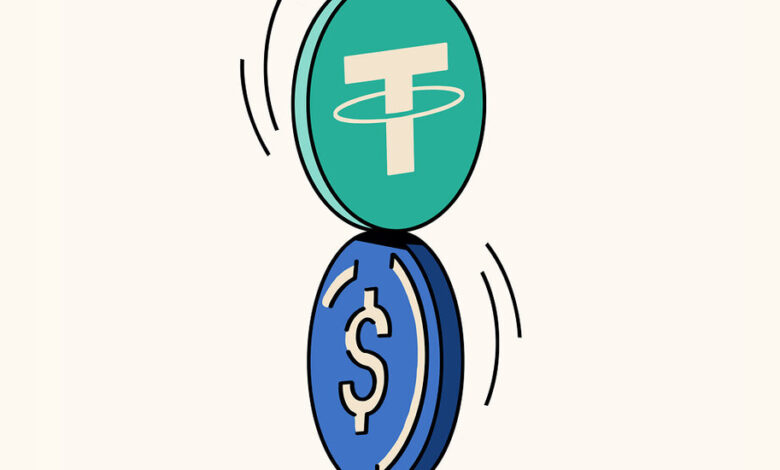
There’s a new type of money spreading rapidly across the internet, propelled by the crypto boom. It’s supposed to be worth a dollar, but it’s not issued by any government. Called a stablecoin, it is a digital currency that is subject to very little legal oversight — and its growing popularity has recently transformed it into a $300 billion market.
You can use stablecoins to buy things online, make investments or send money abroad with minimal fees.
Hundreds of different brands of stablecoins exist now, with more to come. The Trump family introduced its own version this year. Walmart has been exploring one, as have major banks, tech companies and others.
And as big businesses flock to the cryptocurrency, so have bad actors. When pushing for stablecoin legislation in March, Senator Bill Hagerty, Republican of Tennessee, said the United States could not ignore the use of these digital dollars for “illicit activities by drug cartels, foreign terrorist organizations and state actors.”
Financial experts worry that the increasing adoption of these cryptocurrencies could pose large risks to the financial system. Stablecoin companies “enjoy the privileges of being a bank without the responsibilities,” said Corey Frayer, a former official at the Securities and Exchange Commission focused on crypto policy and a director at the Consumer Federation of America, a consumer advocacy group.
The mechanics of how stablecoins work are straightforward. You can buy them, usually from a large online crypto exchange, in a matter of minutes with a wire transfer or credit card. The coins sit in your digital wallet, available for cheap and fast transactions anywhere in the world.
Mani Fazeli, the vice president of product at Shopify, said that since cryptocurrency regulations were still evolving, consumer protections can differ from traditional card payments. He added that the company worked with regulated partners to handle compliance for different parts of the process for payments.
Until recently, stablecoins served two main purposes: buying other cryptocurrencies and making risky crypto bets. But new regulations, including the GENIUS Act that President Trump signed into law this year, legitimized them for traditional payments and banking.
As it becomes more mainstream, many people may not even know they’re using stablecoins for transactions, said John Collison, a founder of Stripe, a payments company.
He cited Félix Pago, a popular app that allows people to send money transfers through WhatsApp and other platforms. Using Stripe technology, Félix Pago converts money into stablecoins to cut out foreign exchange fees, but doesn’t advertise cryptocurrency anywhere on its website.
“For me, this is a sign of the maturity of the industry and the utility of the technology,” Mr. Collison said in an interview.
The lack of transparency worries Mr. Frayer. He predicts that payment companies will slip stablecoins into updated terms of service, so consumers unknowingly agree to crypto transactions every time they swipe their card. But those transactions “will come with none of the protections” that Americans expect, like chargebacks and fraud protection, he said.
Mr. Frayer warns that the proliferation of the coins echoes a dangerous era in American finance. In the 19th century, before federal regulations, private banks issued their own currencies that frequently collapsed, wiping out people’s savings.
Here’s how stablecoins in your crypto wallet differ from a traditional bank deposit:
Five years ago, stablecoins were mostly niche assets for crypto traders. Today, they’re worth more than the yearly economic output of Greece.
Tether, one of the most well-known issuers of stablecoins, made $13 billion in profit last year, according to company disclosures, just from the interest on customer funds. It now has roughly $180 billion in circulation. Circle, which issues the stablecoin USDC, has about $78 billion.
To understand why that matters, you need to understand Treasury bills, or T-bills. T-bills are essentially short term loans taken by the U.S. government to fund its operations, accounting for 20 percent of all U.S. debt. They’re considered some of the safest investments in the world because the United States is very unlikely to default on its debt, especially over shorter time periods. So banks, pension funds, foreign governments and money market funds all heavily invest in this market as a way to safely park enormous amounts of cash while earning a return.
Now, stablecoin issuers are some of the biggest purchasers of Treasury bills. Circle and Tether together hold roughly $136 billion in T-bills, according to an analysis of their financial statements, putting them on par with large nations and institutional investors.
The adoption of stablecoins is expected to surge following the enactment of the GENIUS Act, the key crypto policy of the Trump administration. The Federal Reserve predicts that the total market for stablecoins could reach $3 trillion in five years, nearly equivalent to the entire gross domestic product of France in 2024.
Industry leaders are hailing the new regulation, with Visa’s global head of growth expressing enthusiasm for the GENIUS Act. However, critics like Mr. Frayer from the Consumer Federation of America argue that the law lacks sufficient regulatory oversight and could potentially empower financial entities that are resistant to government regulation.
Stablecoins, existing in a regulatory gray area, have attracted illicit users like criminals and money launderers. Instances of ISIS funding operations using stablecoins and Russian oligarchs evading sanctions by moving funds in stablecoins have been reported. Underground channels on Telegram openly advertise illegal goods and services, accepting Tether payments for untraceable transactions.
Despite claims from Tether of cooperating with law enforcement and freezing assets of bad actors, concerns remain about the potential misuse of stablecoins. The interconnectedness of crypto markets with traditional finance poses risks, as evidenced by fluctuations in stablecoin values following Bitcoin price declines.
The danger of stablecoin failures was highlighted by the collapse of Silicon Valley Bank, which led to a plunge in the value of USDC stablecoins. Unlike bank deposits, stablecoin holdings lack federal protection, putting customers at risk in the event of issuer insolvency.
Instances of questionable practices by stablecoin issuers, such as Tether falsely claiming to hold sufficient assets, have raised doubts about the stability of these digital assets. Downgrades in assessments of Tether’s holdings and concerns over its reliance on high-risk assets like bitcoin and corporate bonds have further eroded confidence in stablecoins.
While Tether maintains that it has bolstered its holdings of safe assets since past controversies, experts like Hilary Allen caution that any uncertainty regarding solvency could trigger a rapid withdrawal of funds. The checkered history of stablecoins underscores the need for robust oversight and transparency in the rapidly evolving cryptocurrency landscape. text as follows:
Please rewrite the text. “The quick brown fox jumps over the lazy dog” as “The fast brown fox leaps over the tired dog.”