Which class are you in?
Understanding Class in America: A Different Perspective
When it comes to discussions about class in America, there is often a focus on income or wealth as defining factors. However, for many individuals, including myself, class identity goes beyond just monetary considerations. Having experienced life in all income quintiles, from the bottom 20% to the top 20%, I have come to realize that one’s class is not solely determined by their financial status.
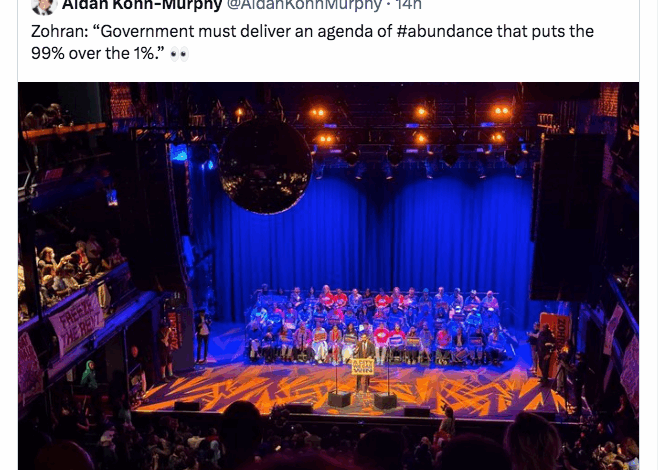
A recent tweet that caught my attention highlighted this issue:
The idea that individuals in the 1% and the 98% percentile are part of the same class is a flawed concept, especially when it comes to issues of “us versus them” battles. How can a homeless person in the Bronx be considered part of the same class as an affluent resident of New York’s Upper East Side in the fight for “economic justice”? This oversimplification fails to capture the complexities of class dynamics.
Historically, Marxists categorized class in terms of capitalists, the bourgeoisie, and the proletariat. While this framework had its limitations, it at least had a logical basis. However, grouping together individuals from vastly different income brackets makes little sense.
Progressives often assume that certain groups, such as immigrants, blue-collar workers, and low-income individuals, belong to their coalition, only to be surprised when they do not vote as expected. The reality is that individuals do not necessarily identify with others solely based on income levels. A worker in California earning minimum wage may not see themselves as part of the same class as someone living off social insurance programs, despite similar incomes in monetary terms.
Matt Yglesias addresses this issue in a recent post:
“The name comes from Ruben Gallego’s remarks to Lulu Garcia-Navarro about the importance of articulating an aspirational agenda of material prosperity as part of Democrats’ pitch to working-class people.”
“It was a joke, but I said a lot when I was talking to Latino men: “I’m going to make sure you get out of your mom’s house, get your troquita.” For English speakers, that means your truck. Every Latino man wants a big-ass truck, which, nothing wrong with that. “And you’re gonna go start your own job, and you’re gonna become rich, right?” These are the conversations that we should be having. We’re afraid of saying, like, “Hey, let’s help you get a job so you can become rich.” These guys don’t want that. They don’t want “economic stability.” They want to really live the American dream.”
This approach focuses on economic growth and raising absolute living standards, rather than just addressing inequality. It speaks to individuals in the lower half of the earnings distribution and emphasizes the American dream.
When progressives talk about the 1% versus the 99%, it reveals a lack of understanding of the complexities of class in America. Class identity is not solely defined by income or wealth but encompasses a range of factors that shape an individual’s social and economic standing.