Woman thought she had pulled a muscle working out. It was a rare cancer that had spread to her brain.
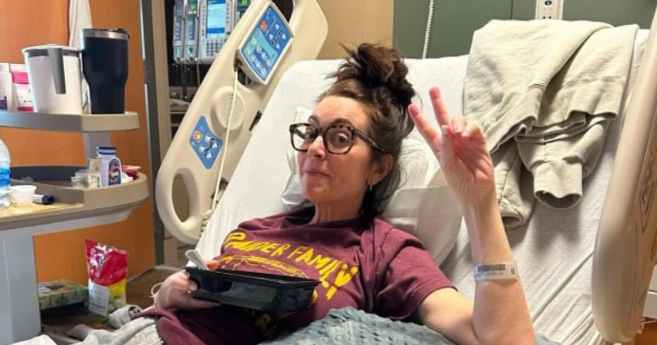
Jennifer Frederick’s Battle with Metastatic Malignant Melanoma
Jennifer Frederick was at the peak of her physical fitness in 2023 when she noticed a small lump in her groin area after a week of intense workouts. Initially dismissing it as a pulled muscle, she became concerned when the lump persisted a month later. Four months down the line, the lump had grown, prompting her to seek medical attention. Tests revealed more lumps in her leg, leading to a biopsy that confirmed a diagnosis of metastatic malignant melanoma. What made Frederick’s case unique was the absence of the typical mole on the skin that is often associated with melanoma.
Metastatic malignant melanoma is a late-stage form of cancer where cancerous melanoma cells have spread from their original location to other parts of the body. Dr. Michael Postow, a medical oncologist at Memorial Sloan Kettering, explained that melanoma can spread extensively throughout the body, with common sites being the brain and lungs. While melanoma is usually identified by the presence of a mole on the skin, some patients may not exhibit this symptom, emphasizing the importance of regular skin checks and consulting a dermatologist for any concerning lumps.
The prognosis for patients with advanced metastatic melanoma has significantly improved in recent years, with the five-year survival rate now around 35%. Clinical trials have shown that certain immunotherapy treatments can increase this rate to 50%. Frederick’s doctor, Dr. Lucy Boyce Kennedy from the Cleveland Clinic, recommended an intensive treatment plan combining gamma knife radiation and immunotherapy drugs. Despite the potential risks, Frederick was determined to undergo the aggressive treatment to regain her health and return to a normal life.
The treatment journey was arduous for Frederick, with severe side effects from the immunotherapy including flu-like symptoms, rash, nausea, and high fevers. Hospitalized for a month due to complications, she had to take a break from treatment to address the debilitating side effects. However, her perseverance paid off as subsequent scans showed significant improvement, motivating her to continue with the treatment regimen.
After 18 months of treatment, Frederick’s cancer has not progressed, and she continues to show signs of improvement. Dr. Kennedy is optimistic about her long-term survival prospects, citing similar success stories from clinical trial patients. Frederick plans to complete her treatment by December 2025 and transition to regular screening scans to monitor her health. She is also actively involved in mentoring other cancer patients through the Cleveland Clinic’s 4th Angel program, emphasizing the importance of early screening and a positive mindset in battling cancer.
As Frederick aptly puts it, “I may have cancer, but cancer does not have me.” Her remarkable journey serves as a beacon of hope for cancer patients, highlighting the advancements in treatment options and the importance of resilience in overcoming the challenges posed by the disease.