Why the European Union’s wartime loan is a vital lifeline for cash-strapped Ukraine

KYIV, Ukraine — Struggling financially, Ukraine has successfully secured a crucial loan from the European Union, providing much-needed support for its wartime efforts in the coming year.
The 90 billion-euro ($106 billion) funding package was officially approved on Thursday, following President Volodymyr Zelenskyy‘s announcement that the Ukrainian portion of the Druzhba pipeline had been repaired, allowing the resumption of oil flow to Slovakia and Hungary, a condition tied to the release of the funds.
The approval of the loan had been delayed due to political tensions within the EU, including opposition from outgoing Hungarian Prime Minister Viktor Orbán, who was perceived as a key ally of the Kremlin in the EU. With Orbán’s recent electoral defeat, negotiations were able to progress.
The EU package holds significant importance:
At a critical juncture, the International Monetary Fund estimates that Ukraine is facing a financing shortfall of approximately 136 billion euros ($158 billion) over the next two years.
The EU loan is anticipated to cover around two-thirds of Ukraine’s financial requirements in 2026 and 2027. Without this support, officials warn that Kyiv could have depleted its resources for essential state functions and its military efforts by this spring. The initial installment of funding is set to be disbursed in the coming months.
Ukraine will have access to 45 billion euros ($53 billion) for the remainder of this year, and another 45 billion euros ($53 billion) for the entirety of 2027.
Under the agreement, approximately one-third of the funds will be allocated to support Ukraine’s government budget, while the rest will be directed towards defense, including the procurement of weapons and the expansion of domestic arms production.
The EU leaders had initially agreed to the loan in December 2025, but its implementation was delayed due to a disagreement concerning the Ukrainian segment of the Druzhba oil pipeline.
In December, the Czech Republic, Hungary, and Slovakia agreed not to obstruct their EU counterparts from borrowing funds from international markets, provided that the three nations were not obligated to participate.
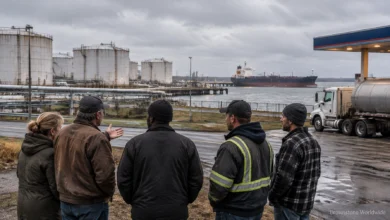
The Druzhba pipeline, which transports Russian oil to Slovakia and Hungary, went offline in late January following Ukrainian claims of damage from a Russian attack. Hungary and Slovakia accused Ukraine of intentionally halting supplies, leading to a broader political standoff within the EU.
The loan was ultimately unblocked after Hungary and Slovakia confirmed the restoration of transit by Ukraine this week. Zelenskyy confirmed the completion of repairs, removing the final hurdle to approval.
The last step, taken on Thursday, was the unanimous approval of changes to the EU’s long-term budget to accommodate the future expenditures. This necessitated the cooperation of Hungary and Slovakia.
EU leaders have stipulated that Ukraine will only commence repayment of the loan once Russia fulfills its obligations for war reparations.
Rather than using Russia’s frozen central bank assets as collateral for the loan, member states opted for a more cautious approach. They decided to borrow the funds themselves to lend to Ukraine.
Concerns regarding potential Russian retaliation and legal complications prompted the decision to maintain the frozen assets until Moscow ceases hostilities and compensates Ukraine for the damages incurred.